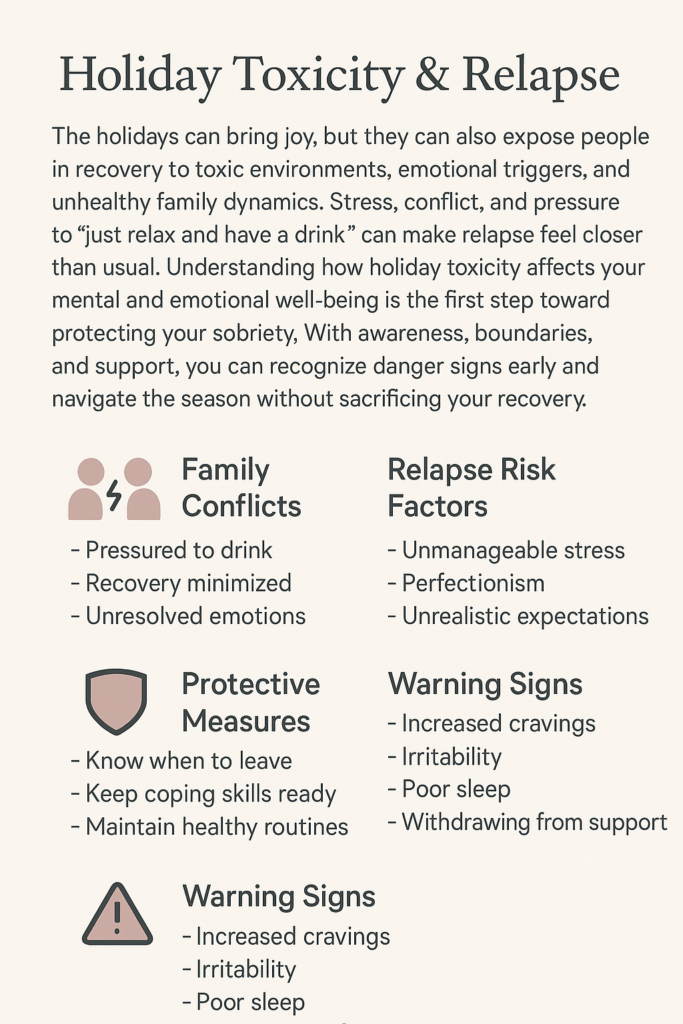
Toxic relationships can be especially hard to navigate during the holiday season. Emotions run high, stress builds quickly, and long-standing family or social dynamics tend to surface more easily. Even strong recovery plans or healthy routines can get thrown off track when you’re surrounded by people who trigger old behaviors or push past your boundaries. I’ve faced my own share of difficult relationships, and I know firsthand how much harder they can feel when you’re working to stay sober or avoid slipping back into harmful habits. During the holidays—with added expectations, social pressure, and emotional intensity—protecting your mental health and recovery becomes even more important. This guide breaks down practical, realistic ways to manage toxic relationships, set firm boundaries, safeguard your progress, and keep your well-being at the center of your holiday season.
Spotting Toxic Relationships (And Why It Matters)
Not every tough relationship is toxic, but if someone repeatedly leaves you feeling drained, anxious, or like you have to walk on eggshells, that’s a pretty big red flag. Toxic relationships can be with family, friends, coworkers, or even romantic partners. Here are some signs I watch for:
- Constant criticism: They nitpick or undermine you, making you doubt yourself, even during celebrations.
- Guilt-tripping: They push your buttons and make you feel responsible for their moods or happiness.
- Unpredictable mood swings: You never know which version of them you’ll get.
- Boundary violations: They don’t respect your limits, even when you’re clear about what you need.
- Gaslighting: They twist reality, leaving you unsure if you’re overreacting or imagining things.
Identifying who makes you feel this way helps you prepare. It’s not about labeling people as good or bad; it’s about paying attention to your own well-being and putting it first, especially during stressful times.
Prepping for Tricky Situations Before the Holidays
You don’t have to go into the holidays unprepared. When I know I’ll be around someone tough to deal with, I make a plan. Here are a few steps that have saved my sanity:
- List your triggers: Notice if specific topics, behaviors, or situations set you off.
- Visualize your responses: Practicing what to say or how to excuse yourself can make it much easier in the heat of the moment.
- Share your plan: Talk with a supportive friend, therapist, or recovery sponsor in advance so you have backup if things get hard.
- Set expectations: It’s totally fine to let family or friends know ahead of time how you’ll handle uncomfortable moments, like stepping outside for air or leaving early if you need to.
Having a plan doesn’t mean you’re expecting disaster, just that you’re looking out for your own peace of mind. That’s strength, not weakness.
Building Boundaries That Actually Work
Boundaries often get talked about, but putting them into practice, especially with family, can be tricky. If you’re recovering from addiction or trying not to slip back into unhealthy behaviors, boundaries protect your progress. Here’s what I do:
- Decide what’s nonnegotiable: Figure out in advance what you won’t tolerate (for example, being around people who drink if that’s not safe for you).
- Communicate clearly: It’s not rude to say, “I can’t talk about this,” or “I’m not drinking this year.” People may try to push back, but sticking to your script is really important.
- Control your time: Give yourself an out. Sometimes I’ll drive separately to a gathering so I can leave without fuss if things get rough.
- Limit contact: If certain people always cause drama, you can choose to see them less or not at all over the holidays. Sometimes, a simple text or call, rather than face-to-face visits, makes things much more manageable.
Healthy boundaries keep you grounded and help you avoid the situations that might tempt you back into old habits. Practicing what you’ll say and sticking to it is a handy skill that gets easier with time. For example, you could keep a short phrase in your back pocket, ready to use whenever things get tense. You might say, “I’m going for a walk,” or “I’m stepping out for a minute.” These types of actions show you respect yourself, even if others push your limits.
Guarding Your Sobriety and Mental Health During Gatherings
Get-togethers with toxic people can trigger feelings of stress or loneliness, both of which can make relapse more tempting. Protecting your sobriety or mental health means planning for these challenges ahead of time. Here’s what I find really helpful:
- Bring your own nonalcoholic drinks: Holding a can or cup in your hand fends off awkward questions and keeps you in control.
- Take breaks: Stepping outside for a few minutes of fresh air can help prevent stress from building up. I’ll sometimes grab my phone and check in with a friend during the event.
- Know your early warning signs: If you feel edgy, hopeless, or start thinking about using, that’s your cue to change things up, get some support, or leave if you need to.
- Have a signal with someone you trust: Agree on a code or phrase you can use if you need help or want to exit quietly.
It’s perfectly fine to keep things lowkey and protect your peace. That’s an act of self-respect, not avoidance. Sometimes you’re going to run into people who don’t get it or who question your choices. That’s okay. Remember, you’re the one in control of your recovery. And if you need to skip an event entirely, that’s perfectly valid. Spending time instead with friends who support your journey can often be much more uplifting and meaningful during this season.
What to Do If You Slip or Face a Setback
Relapses and setbacks can happen, and the holidays can increase the chances just because there’s so much pressure in the air. If you hit a bump in the road, there’s no shame in reaching out for help. I’ve learned that honesty is always the best policy, both with yourself and with people who understand recovery. Here are simple steps that help me get back on track:
- Acknowledge what happened: Blame and guilt don’t help; admit it happened and decide to move forward.
- Reach out: Talk to someone you trust, such as a sponsor, therapist, or close friend. Often, saying things out loud makes them less scary.
- Revisit your plan: Look at what worked before and what didn’t, and adjust your strategy for next time.
- Practice self-kindness: A slip doesn’t erase your progress. You deserve support, not criticism, especially from yourself.
Bouncing back quickly is so important. Even if you take a wrong turn, you can always get back on the path to recovery. Helpful resources, such as SAMHSA’s National Helpline, are available if you need someone to talk to right away or want local support. You might also check out other support lines or local community groups, many of which run special meetings or extra events during the holidays. It’s easier to handle setbacks when you know you’re not alone, and reaching out is a sign of strength.
Extra Ideas to Support Your Recovery This Season
Making it through the holidays with your well-being (and sobriety) intact often takes more than just avoiding toxic people. A few extra tools in your toolbox can make a big difference:
- Stick to a routine: Keeping your sleep, meals, and self-care steady helps you feel stronger and less rattled.
- Lean on your community: Support groups or online forums can offer real-time encouragement. Attending meetings or joining virtual check-ins can be super helpful in feeling less isolated.
- Find healthy ways to cope: Bring a book to gatherings, listen to calming music, or doodle in a notebook, whatever helps you stay centered and calm. Journaling about your experiences or writing a gratitude list right before or after gatherings can help you process your emotions more positively.
- Practice gratitude: Focusing on what’s working or what you appreciate each day can change your outlook and help you deal with triggers in a healthier way.
- Move your body: Go for a brisk walk, stretch out at home, or even dance to your favorite track to shake off tension. Physical movement, even just a couple of minutes at a time, can boost your mood and lower stress fast.
Little efforts add up over time. Taking a moment to reward yourself for your progress goes a long way. Remember that self-care can look different for everyone, and what matters most is that you find what works for you, even if it’s just a handful of minutes each day devoted to yourself. You might stumble upon new ways to relax or connect with others this season, and that’s worth celebrating, too.
Frequently Asked Questions
Here are a few common questions I hear from folks looking to avoid relapse by handling toxic relationships during the holidays:
Question: How do I handle guilt about limiting contact with family?
Answer: Guilt happens, but protecting your well-being is a valid reason to set limits. It’s healthy to make choices that support your recovery, even if others don’t always understand right away. You’re allowed to prioritize your mental and emotional safety, no matter what traditions say.
Question: What if others pressure me to attend events I’m not comfortable with?
Answer: You can politely decline or let them know you’re focusing on self-care this year. You don’t owe anyone a detailed explanation. Your need for a safe environment is real, and it’s okay to say no firmly and kindly.
Question: Are there quick ways to calm anxiety during stressful gatherings?
Answer: Breathing deeply, stepping outside, or texting a supportive friend can take the edge off quickly. Having a calming playlist on hand can help, too. You might also try counting to ten slowly or carrying a small object (like a smooth stone or a favorite photo) in your pocket to ground yourself.
Your Wellbeing Comes First This Holiday Season
Prioritizing how you feel and avoiding toxic influences during the holiday season is a real act of courage. The steps you take today, no matter how small, help shield you from setbacks and make space for a happier and healthier new year. You absolutely deserve it. Remember, this season is for you, too, and taking care of yourself is always worth it. Reach out for support as often as you need, celebrate every win, and keep moving forward—one day at a time.
Video: Toxic family members are hitting different in recovery #StaySober #BoundaryWork #MentalHealthSupport