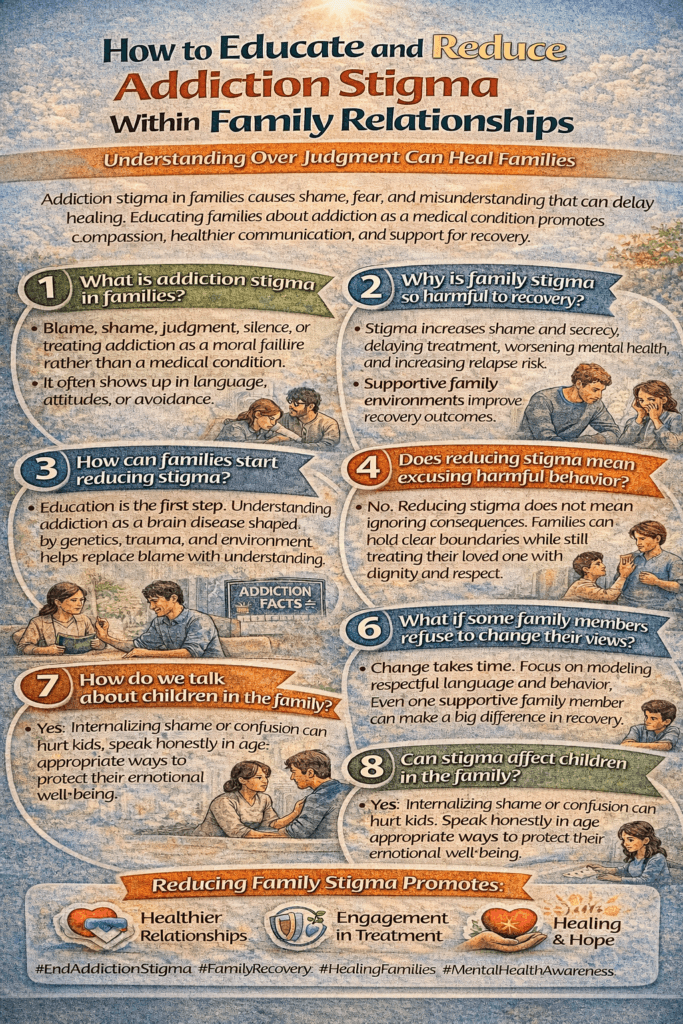
Talking about addiction within families can feel complicated, emotional, and even uncomfortable. Loved ones may carry fear, frustration, guilt, or confusion, while the person struggling with addiction may feel shame or judgment. In the middle of all this, stigma quietly grows — negative beliefs and attitudes about addiction that can create distance instead of connection. This stigma doesn’t just make recovery harder for the individual; it affects communication, trust, and the overall emotional health of the entire family. Learning how to break down stigma at home is one of the most powerful steps families can take to support healing. When families replace blame with education and compassion, they create space for honest conversations, stronger relationships, and real recovery to begin. In this guide, I’ll share practical, real-world ways families can educate themselves, soften harmful assumptions, and build a home environment where understanding and support lead the way.
Understanding Addiction Stigma Within Families
Stigma around addiction shows up in families in all kinds of ways. Sometimes it might be a parent using harsh language about addiction. Other times, it’s the quiet avoidance of actual conversations or just believing that addiction is a sign of weakness or bad choices. I’ve seen how these attitudes can keep families stuck and make recovery feel that much harder for everyone.
Getting why stigma exists is the first step. Addiction, at its core, is a medical condition that affects the brain and behavior. But there’s a lot of outdated thinking that still sees it as nothing more than a lack of willpower. This misunderstanding can lead to shame, silence, and fear, not just for the person using substances but also for those around them. For families who want to move forward together, unlearning these old attitudes is pretty important.
How Education Changes the Conversation at Home
Learning about addiction isn’t just about reading definitions; it’s about tracking down the bigger picture. Families who educate themselves on addiction start to see it in a new light. That switch up can mean more compassion, deeper conversations, and less judgment.
- Science-based knowledge: Reliable info from organizations like the National Institute on Drug Abuse and the Substance Abuse and Mental Health Services Administration (SAMHSA) helps families see that addiction changes brain chemistry, decision-making, and impulse control.
- Personal stories: Watching documentaries, listening to podcasts, or reading real-life accounts helps everyone get a sense of the ups and downs people go through. It puts a more human face on things, which makes stigma a lot harder to hold onto.
- Common myths busted: A lot of families start out thinking that only certain types of people get addicted, or that recovery is just about “trying harder.” Learning the truth can switch up those beliefs and spark some eye-opening conversations.
Families that commit to ongoing learning—maybe sharing articles, inviting a counselor to speak, or setting aside time for open Q and A—find it gets easier to talk honestly about addiction and recovery. Over time, this kind of shared learning doesn’t just improve knowledge; it also helps build bridges between family members who may have once avoided tough talks.
Steps Toward Reducing Stigma in Family Relationships
Creating a home atmosphere that supports recovery is doable, but it requires some changes in how people think and talk. I’ve seen families make big strides just by being intentional about their words and actions. Here’s what that looks like in practice:
- Use person-first language: Swapping phrases like “addict” with “person with a substance use disorder” helps put the focus on the person, not the problem. Language really matters, especially for self-esteem and feelings of safety.
- Practice empathy: Sometimes just asking, “How are you really feeling?” or listening without offering solutions can go a long way. Showing genuine empathy starts to chip away at stigma.
- Avoid blame or shame: Pointing fingers about why addiction happened rarely leads to progress. Replacing painful “why did you do this?” questions with “how can I support you?” creates space for healing.
- Model nonjudgmental conversations: When adults in the family speak openly and calmly about addiction, it teaches younger folks that talking about tough topics is normal, and there’s nothing to hide or be embarrassed about.
Making real changes can feel awkward at first, especially if people are used to sweeping things under the rug. The more practice a family gets, the easier it becomes to support each other in more positive ways. Over time, these small changes can lead to a new family culture—one built on acceptance and honesty.
Common Hurdles and How Families Can Overcome Them
Anytime families get serious about addressing addiction and stigma, there are going to be some roadblocks. Knowing what might pop up helps families respond rather than react. A few common things I’ve seen:
- Grief and fear: Many families feel overwhelmed by sadness, guilt, or worry about a loved one’s addiction. Education and connecting with support groups, such as Al-Anon or online communities, can help take the edge off those feelings.
- Pride and privacy: Some families worry about “airing dirty laundry.” This can keep problems hidden. Gentle reminders that lots of people deal with addiction can help lessen feelings of isolation or embarrassment.
- Miscommunication: Misunderstandings and mixed messages can strain relationships. Setting up short, regular family check-ins to share updates or just say how things are going makes a big difference in staying connected.
Reacting With Compassion, Not Criticism
I’ve found that learning new ways of reacting, especially in tense moments, can turn everything around. Instead of jumping to conclusions or raising voices, pausing to remember that everyone’s learning can cool things off and make room for growth.
Letting Go of “Fix It Mode”
Many family members want nothing more than to solve the problem. While this comes from a good place, it’s usually more helpful to support someone’s independence and choices, even if they aren’t what you would pick. Taking a step back and focusing on encouragement rather than control is super important for building trust. Remember that real, lasting recovery is often a long adventure with ups and downs, and showing patience goes a long way.
Tools and Resources That Make a Difference
There are so many practical resources out there to help families talk about addiction and give a boost to efforts to reduce stigma. I always suggest checking out at least a few of these options to track down what works for your home:
- Family therapy: A licensed therapist specializing in addiction can help families navigate tough conversations and introduce healthier communication strategies.
- Support groups: Groups like Al-Anon, Nar-Anon, and SMART Recovery provide support just for families, offering a place to learn from and connect with people in similar situations.
- Books and digital resources: Titles like “Beyond Addiction” and reputable websites (like SAMHSA) are pretty handy for deepening your understanding.
- Community workshops: Many local organizations offer free or low-cost workshops covering the basics of substance use, stigma, and recovery support. These are worth checking out as a way to keep learning together.
Families that check out these resources often find new language, strategies, and confidence to help one another. The more tools you put to work, the better equipped you’ll be to face challenges and move forward as a team.
Real Life Examples of Reducing Stigma at Home
Plenty of families have made small adjustments that lead to big positive switch-ups. For instance, one parent I know stopped using shaming words after reading some pamphlets from a local clinic. That little change gave their child space to talk honestly about what recovery looked like, and the fights at home dropped off fast.
Another family made a weekly habit of checking in over dinner, with each person sharing something they’d learned about addiction or something that was worrying them. People got more comfortable, stress levels came down, and it even brought siblings closer together. Even introducing simple rituals, like a family walk or regular “listening time,” can make a big difference in building trust and openness over time.
Frequently Asked Questions
Here are some questions families sometimes ask when they start learning about addiction and stigma:
Question: How can I discuss addiction with younger family members without scaring them?
Answer: Keep things age-appropriate. Focus on the idea that addiction is a health issue, and that people deserve support. Answer questions honestly, but skip the scary details unless they ask specifically. Normalize the idea that needing help sometimes happens to anyone, and it’s okay to talk about these things at home.
Question: What if my family isn’t ready to talk about addiction yet?
Answer: Start slowly. Maybe leave some info around the house or share an interesting article. Sometimes it takes time for everyone to warm up to the idea of open conversation. If direct talk feels too hard, consider setting an example by showing kindness and acceptance through actions rather than words.
Question: Are there ways to support a family member in recovery without feeling like I’m enabling?
Answer: Encourage healthy choices and celebrate progress, but set boundaries if needed. Support doesn’t mean ignoring your own needs or letting someone cross lines that make you uncomfortable. Try to keep communication open about what works for both of you and step up when your family member is making positive moves.
Creating Lasting Change Through Ongoing Effort
Reducing addiction stigma within families really is an ongoing process. It’s about being curious, open to learning, and willing to challenge old beliefs. Every honest conversation chips away at silence and shame, making space for healing and genuine support.
No one gets this right perfectly on the first try. The important thing is just to start and to keep moving forward together. Small, consistent changes will add up, and over time, your family can build a more open, forgiving, and understanding space for everyone involved.
Video: The family conversation about addiction nobody wants to have #recovery #support #familyhealth