The holiday season can be a beautiful time of year, but if you’re in recovery, it often brings its own set of challenges. Between parties, travel, and old habits resurfacing, staying on track with your progress takes more than just strong willpower. A solid support system makes a huge difference, offering the backup and accountability that helps prevent relapses. I’ll walk you through some practical ways to build and lean on a support system that can keep you steady all season.
Why the Holidays Can Be Tough for Recovery
Holiday traditions, family events, and social gatherings can be loaded with triggers. There’s food and drink everywhere, and it’s not uncommon to run into people or situations that remind you of old routines. On top of that, the pressure to appear cheerful or keep up appearances can make you feel isolated, even in a crowd. These factors can make this time of year risky if you’re trying to avoid relapse, and this is precisely why a support system is super important right now.
Research and recovery communities have found that people with strong support networks tend to have more success staying sober or sticking with healthy choices (NIH, Social Support and Recovery). A support system is like a safety net. It won’t fix every problem overnight, but it gives you something to hold onto when things get tough.
Understanding What a Support System Looks Like
A support system isn’t just one thing. It’s a mix of people, places, and routines that help you keep moving forward. For me, a support system includes:
- Friends and Family: People who understand your adventure, respect your boundaries, and genuinely want to help.
- Professional Help: Therapists, counselors, or recovery coaches are especially handy for guidance and problem-solving.
- Peer Groups: Recovery meetings (in person or online), sober social clubs, or group chats where you can talk to others facing the same stuff.
- Personal Tools: Journaling, meditation apps, or routines that keep your mind focused and stress in check.
Building a supportive circle before the holidays arrive means you won’t be scrambling if cravings or challenging emotions sneak up on you. This helps a lot with feeling prepared, like having a toolkit that’s always close by.
Steps to Building a Solid Holiday Support System
You can design your holiday support system to fit what works for you. Here’s what I suggest, based on what has worked for me and others I know in recovery.
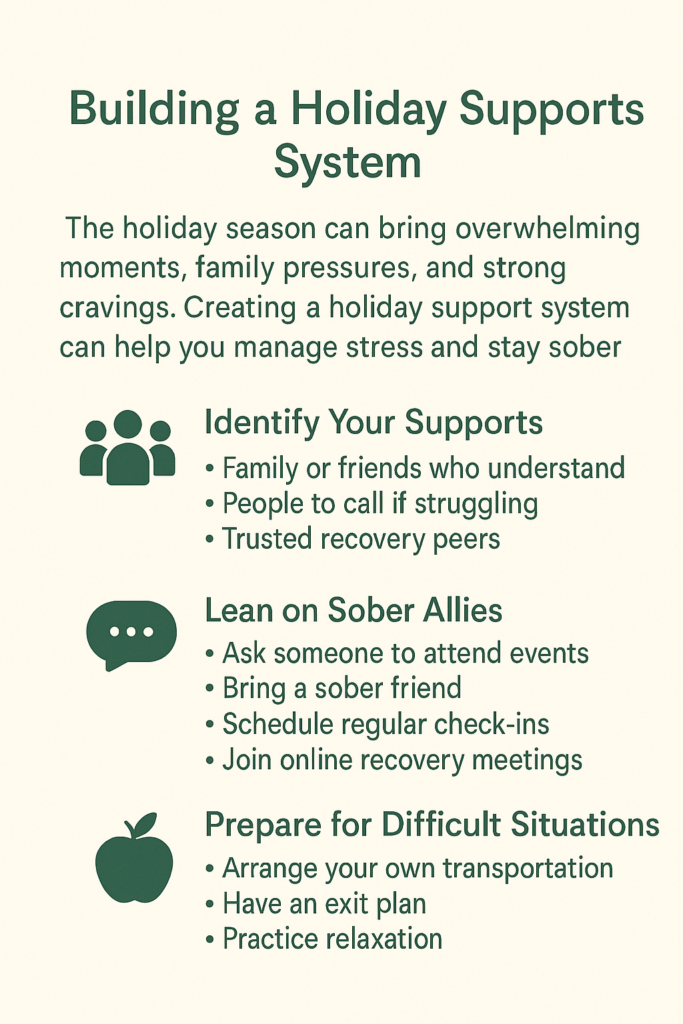
- Map out Your Network: Take a few minutes to list out people, groups, or resources you can turn to. This could be a trusted friend, a recovery mentor, a therapist, or even a 24/7 online chat. Having names and numbers saved ahead of time makes reaching out much easier.
- Communicate Your Needs: Don’t wait until you’re struggling to start the conversation. I’ve found that letting people know how they can support you (like avoiding specific topics or steering clear of alcohol at your get-togethers) really helps prevent misunderstandings.
- Schedule Regular Check-Ins: Setting times to talk with your go-to supporters can be a huge help. Even a quick text or call every other day over the holidays can keep you grounded and let your support crew spot any warning signs early.
- Get Connected Locally and Online: It’s worth looking into local holiday events run by recovery organizations, or joining sober Facebook groups and forums. Sometimes, a little reassurance from someone who gets it makes all the difference.
- Plan for High-Risk Situations: Make a game plan for events with alcohol, difficult relatives, or late-night parties. Practice what you’ll say if someone offers you a drink or pushes your boundaries. Having a buddy on standby to call or text can help you step away if things get overwhelming.
A little prep work pays off, and the people who care about you probably want to help but may not know how unless you give them a heads-up.
Common Challenges and How to Handle Them
Even with great support, challenging moments are still part of the deal. Here are a few obstacles I’ve seen come up around the holidays and the moves that help deal with them:
- Feeling Alone at Social Events: Bringing a sober friend or having someone to call as your emergency contact can really help. Taking breaks during big gatherings to reset (even if it’s just stepping outside) gives you space to breathe.
- Family Stress or Old Arguments: Practicing “pause” responses before reacting and keeping your support team informed about how you’re feeling goes a long way. Sometimes, getting an outside perspective from a counselor or group chat can offer balance.
- FOMO (Fear of Missing Out): Saying “no” to risky events is tougher when everyone else seems to be having fun. Planning your own low-pressure get-together or a fun solo activity gives you something to look forward to.
- Breaking Routines: The holiday schedule can be unpredictable. If your regular meetings or self-care routines get disrupted, try to anchor your day with at least one nonnegotiable habit (like a morning walk or journaling). When things feel off, reaching out for a bit of encouragement can keep you steady.
Managing Triggers
Holiday-specific triggers, like seeing alcohol around every corner or running into people from your past, are pretty standard. For me, making a “trigger plan” helps a lot. This is just a simple checklist of what I’ll do if I start to feel shaky, such as stepping away, texting a friend, or distracting myself with music or a funny video.
Celebrating Wins
Recognizing your progress is really important, especially when everyone else is celebrating. Set small goals for yourself (like getting through a particular event sober) and reward yourself for hitting them. Share your successes with your support system – they’ll be happy to cheer you on.
Extra Tips for Strengthening Your Holiday Support System
A support system doesn’t work well if you build it and then hope for the best. Here are a few extra ideas, drawn from recovery resources and what’s worked for me:
Make Self-Care a Group Activity: Invite your friends or family to join in healthy stuff, like going for a walk, baking treats together, or volunteering.
Share Relapse Prevention Tools: Ask your support system to help you spot warning signs or use the “HALT” checklist to check whether you’re Hungry, Angry, Lonely, or Tired. This is a quick way to notice if you need a break or extra help.
Revisit Your Recovery Plan: The holidays can throw curveballs, so reviewing your plan with a counselor or mentor helps make sure it’s still working for you.
Encourage Peer Accountability: Buddy up with someone else in recovery to swap daily messages or progress updates. Knowing someone cares how you’re doing adds a layer of accountability.
Real-World Examples of Support System Success
I’ve seen firsthand how an active support system can make all the difference. One friend of mine made a calendar of daily check-ins with his recovery partner, which kept both of them connected and calm through a busy December. Another joined a holiday volunteer group that brought together people in recovery for non-drinking, supportive activities, which helped her stay distracted and positive.
- Sober holiday meetups: Several cities offer meetups or coffee socials for people in recovery during the holidays. These tend to be relaxed and pressure-free, giving you a chance to connect with others in a similar spot.
- Online group chats or communities: Subreddits, forums, and private Facebook groups for sober living offer ongoing support and tips, especially when travel or weather keeps you indoors.
Frequently Asked Questions
These are some of the most common questions people have about building a support system during the holidays:
Question: What should I do if my family isn’t supportive?
Answer: It helps to reach out to friends, recovery groups, or professionals who understand where you’re coming from. Your primary support doesn’t have to be family if they aren’t able to offer what you need right now.
Question: Is it okay to skip parties or events if I’m worried about relapsing?
Answer: Absolutely. Prioritizing your recovery is more important than attending every event, and true friends will respect your choices. Plan a different activity or invite supportive people for a smaller gathering if you still want to socialize.
Question: How can I make reaching out for support less awkward?
Answer: Practice ahead of time and remember that most people appreciate being asked for help. Even a short text like, “Hey, can I check in with you over the holidays?” makes it easier the next time you need to reach out.
Finding Your Own Recovery Community
Building a support system for the holiday season takes some effort, but having people you trust – and knowing how to use your backup plan – sets you up for a better, steadier experience. Finding your community, whether that’s in person, online, or a mix of both, makes all the difference when holiday stress pops up. With the proper support around you, it’s easier to focus on building traditions that fit the life you want, not just the one you’re trying to leave behind. Remember, it’s not just about avoiding pitfalls; it’s about embracing new connections and joys that come with recovery. Showing gratitude to those who support you and paying it forward to others in the recovery community can be fulfilling ways to strengthen your network and boost your own sense of purpose. Even if this season comes with bumps along the way, every step you take to build and use your support system is a win worth celebrating. Keep reaching out, keep building honest connections, and know that a new, meaningful kind of holiday is within reach.
Video: Don’t Face the Holidays Alone, Build This First #SoberSupport #MentalHealthSupport #StaySober