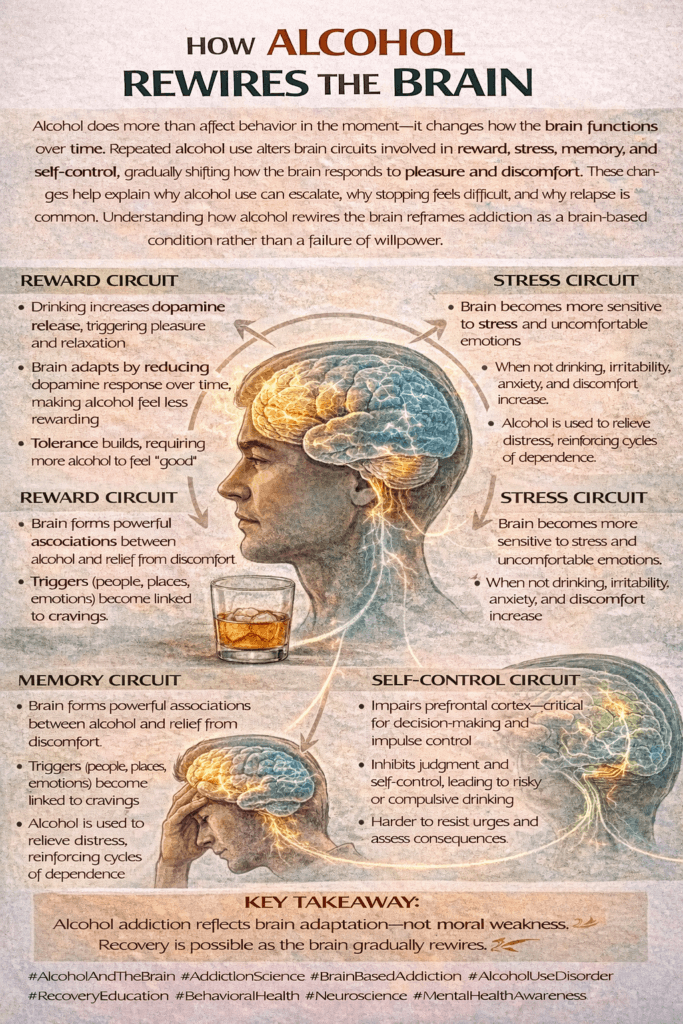
Alcohol has a reputation for letting people relax and unwind, but what’s really going on behind the scenes in your brain is more complicated than just feeling loose. When you drink, alcohol isn’t just changing your mood on the surface. It’s working deep inside your brain. Over time, this rewiring impacts not just how you feel in the moment, but also your mood, memory, habits, and even your ability to make decisions. Here, I’m breaking down exactly how alcohol reshapes the brain and how it can affect everyday life.
Alcohol’s Immediate Effects on the Brain
When you take your first sip, alcohol heads straight into your bloodstream and then up to your brain. The effects start quickly. At first, you might feel more relaxed or a bit buzzed. That’s because alcohol increases the activity of a neurotransmitter called gamma aminobutyric acid (GABA), which has a calming effect on your nervous system. At the same time, it slows down another neurotransmitter, glutamate, which is responsible for excitement and alertness.
This balance shift is why people feel more chill and less anxious after drinking. Your brain’s frontal cortex also gets dulled; self-control and decision-making take a back seat. Sometimes that’s why people become more talkative or act impulsively after drinking.
Even just one night of drinking can mess with how different parts of your brain communicate. Think of it as a temporary rewiring; your brain’s signals are firing differently because of alcohol’s interference. When the alcohol wears off, most things return to normal. But regular drinking can make some changes stick around and impact you more often than you think.
What Happens When You Drink Regularly
If alcohol becomes part of your routine, your brain does its best to adapt. At first, your body treats alcohol as something new and does its best to get rid of it as quickly as possible. But after a while, your brain starts to expect this regular dose and adjusts its own wiring to compensate. This is why people often don’t notice gradual changes until they look back months or years later.
- Reduced Impact: Over time, you might notice you need to drink more to feel the same buzz. This is called tolerance, and it means your brain has gotten used to alcohol’s effects and is working hard to balance things out.
- More Glutamate, Less GABA: Your brain tries to keep things balanced, so when alcohol is always around, it cranks up the excitatory glutamate and dials back GABA sensitivity. When you stop drinking, things can swing the other way, leading to anxiety, irritability, or trouble sleeping.
- Changes to Reward Pathways: Frequent drinking boosts dopamine, a brain chemical linked to feeling good and wanting things (like food, fun, or alcohol). After a while, your brain depends on alcohol for that dopamine spike, and other things just don’t hit the same way.
This rewiring doesn’t just affect nights out or parties. It shapes your cravings and habits, making alcohol more tempting and sometimes harder to cut back, even when you want to.
How Long-Term Drinking Reshapes the Brain
Regular alcohol use doesn’t just tweak your brain’s wiring; it changes the actual structure of your brain over time. That’s why people who’ve been drinking heavily for years sometimes struggle with memory, focus, or managing emotions even when sober.
- Hippocampus Shrinkage: The hippocampus helps you turn short-term memories into long-term ones. Heavy drinking can actually shrink this area, making it tough to remember new things or recall simple details. Studies published by the National Institute on Alcohol Abuse and Alcoholism support this, with MRI scans showing reduced brain size in heavy drinkers (NIAAA, 2022).
- Frontal Lobe Changes: This part of the brain is involved in judgment, planning, and self-control. Long-term alcohol use can dull these skills, leading to impulsiveness and poorer decision-making.
- Disrupted White Matter: White matter connects different parts of your brain. Alcohol can damage or degrade these connections, so information doesn’t travel as smoothly.
These brain changes don’t just show up in people with severe problems either. Even moderate regular drinking has been linked to slight changes in brain structure and function over time (Harvard Health Publishing, 2023). These differences might be subtle in day-to-day life, but they can add up over the years, especially if other health factors are involved.
Why Alcohol Becomes So Habit-Forming
Alcohol often gets its hooks in because it hijacks the brain’s reward system. Usually, your brain creates feel-good chemicals like dopamine in response to natural rewards—eating tasty food, hanging out with friends, or finishing a project. Alcohol shortcuts this process and floods the brain with dopamine.
Over time, your brain starts connecting alcohol with feeling good, which makes you want to keep drinking. These changes make cravings more intense and coping without alcohol tougher. That’s a big reason why breaking the habit can be so challenging for some people.
- Dopamine Release: Alcohol increases this quick rush, so you feel relaxed and happy in the moment.
- Desensitization: With steady drinking, the brain dials down its own dopamine production and receptor sensitivity, so you need more alcohol to reach that earlier buzz.
Soon enough, the brain relies more on alcohol than on other life pleasures to feel good. This is a sign things are starting to switch up in a more serious way, and you might find yourself reaching for a drink even when you hadn’t planned to.
Common Challenges When Cutting Back or Quitting
Deciding to quit or reduce alcohol is tough for a lot of people because their brains have gotten used to those rewired pathways. Here’s what people usually run into when they try to stop:
- Withdrawal Symptoms: These happen because your brain is suddenly missing the alcohol it’s come to expect. People might feel anxious, shaky, or have trouble sleeping. For those who drank heavily, withdrawal can even be risky without medical help.
- Mood Swings: Without the artificial dopamine spikes from alcohol, lows can feel a bit deeper until your brain learns to rebalance.
- Strong Cravings: Your brain’s reward circuits crave that easy hit of comfort, making temptation a real challenge, especially in stress or social settings.
Getting back to more stable moods and clearer thinking is usually possible, but it takes time and support while your brain resets. According to research explained by the National Center for Biotechnology Information, most people see improved brain function with continued abstinence, often within months. During this time, support from friends, family, or a support group can make all the difference.
Why Does Recovery Take So Long?
It’s not just about breaking a bad habit. Your brain needs time to rebuild the nerve connections and chemicals that were altered during regular drinking. Think of it like relearning a skill after months or even years of doing it differently. The bright side is that brains are pretty adaptable, and with consistent change, most people notice better memory, mood, and focus again. For some, it even feels like a mental fog has finally lifted after a period without alcohol.
Every day, Areas of the Brain Alcohol Affects Most
Alcohol isn’t out to get just one part of your brain. It manages to touch a bunch of areas that have a big impact on daily life:
- Prefrontal Cortex: In charge of making decisions, solving problems, and controlling urges. Alcohol makes this area less effective, which is why you might make riskier choices after a few drinks.
- Amygdala: Handles emotions and fear responses. Drink enough, and emotions either feel way stronger or kind of numb, leading to unpredictable reactions.
- Cerebellum: Helps you with coordination and balance. That’s why walking or even moving around can get wobbly with too much alcohol. You might also have slower reflexes or coordination even after just a few drinks.
If you’ve ever noticed you fumble your words, laugh more easily, or get emotional after a drink, that’s your brain’s wiring getting scrambled for a while. Regular drinkers may also notice changes over time in how they react or process information, especially as tolerance builds up.
Quick Reference: Alcohol’s Impact By the Numbers
- 10-15%: The estimated reduction in hippocampus size among heavy drinkers compared to non-drinkers. This number gives you a sense of how real these physical changes can be.
- 2 drinks a day: Even modest daily drinking has been shown in some studies to speed up age-related brain shrinkage (BMJ Study, 2017).
- 6 hours: How long alcohol’s short-term effects on memory and self-control can linger after drinking stops, sometimes even more, depending on your body and drinking history.
Reducing the Risks & Finding Balance
The good news: You don’t have to avoid alcohol forever to look after your brain. Small changes can go a long way. Swapping out some drinks for alcohol free days, mixing in other stress management tricks (like exercise or hobbies), and reaching out for support if you’re struggling can all support your brain’s health.
- Set Drinking Goals: Deciding ahead how much you’ll drink can help you stick to healthier limits. Tracking your intake for a week or two can also shed light on patterns you might not notice otherwise.
- Know Your Triggers: Notice when and why you want to drink; recognizing these patterns makes it easier to adjust. Sometimes, just pausing and naming your craving is enough to give you more control.
- Get Professional Help If Needed: If you find it tough to cut back, chatting with a counselor or joining a support group can make things easier and less overwhelming. You’re never alone in facing these challenges. There are lots of different resources, both online and in person, that can walk you through the process.
Most of all, be patient with yourself. The brain is always learning and adapting, and change just takes a bit of time. Any step toward balance and moderation helps you protect your mind and set yourself up for long-term health.
Frequently Asked Questions
Here are a few common questions about how alcohol affects the brain:
Question: Can brain damage from alcohol be reversed?
Answer: For many people, stopping drinking gives the brain a chance to repair. Memory, mood, and thinking can get better after a few months of staying alcohol free. Some changes, such as brain shrinkage, may take more time to reverse, and severe damage may not fully reverse. Ongoing research is checking out how much recovery is possible at different stages.
Question: Is occasional drinking bad for the brain?
Answer: Most evidence shows that light, occasional drinking isn’t likely to cause big brain changes, but even small amounts can slow reaction time and judgment in the moment. The risk goes up with heavier or more frequent drinking, so moderation makes a real difference.
Question: Why do people blackout when drinking?
Answer: Blackouts happen when alcohol messes with the hippocampus, stopping your brain from forming new memories temporarily. It’s a sign that your brain is overloaded and can’t keep up. These memory gaps can be dangerous if you drive or make big decisions during a blackout, so they’re worth taking seriously.
How I Approach Brain Health With Alcohol
Keeping my brain sharp is something I care about, so getting familiar with these effects has helped me make better choices about drinking. I’m not saying you have to go teetotal, but it pays to notice your own patterns, keep an eye on how alcohol affects your mood and memory, and get help if things feel off. Brains are resilient; they bounce back with a bit of care, good habits, and the right support systems. Taking the time to learn how alcohol really works gives you the power to decide what balance works for your own life. Everyone’s brain is different, so tuning in to your own experiences makes a big difference in long-term health.
Video: How Alcohol Rewires Your Cancer Risk #shorts #health #prevention