Casual drinking is a familiar part of many social gatherings. Sharing a drink with friends after work, popping a bottle at celebrations, or sipping something during movie night usually seems harmless. Yet even low-key alcohol habits can sometimes carry risks that don’t get much attention. Let me dig into what often gets missed about casual drinking, explore ways these patterns might actually impact health and lifestyle, and offer practical tips if you’re hoping to be more mindful—with some bonus ideas to spark new routines without alcohol.
The Real Meaning Behind Casual Drinking
Casual drinking means enjoying alcohol in smaller amounts, usually not every day, and not with the intention of getting drunk. Social events, dinners with friends, or weekend get-togethers commonly include a glass of wine, beer, or a mixed drink. For many, it’s just part of relaxing and socializing. It’s so normal that people hardly notice the potential risks hiding in plain sight.
Alcohol is among the most popular substances worldwide. People tend to see a drink as an easy way to unwind or bond. But because casual use seems nonproblematic, most people don’t connect moderate drinking with real health concerns. Understanding that even a little can make a difference helps you make decisions that really support your long-term well-being.
Looking Beyond the Obvious: Health Risks
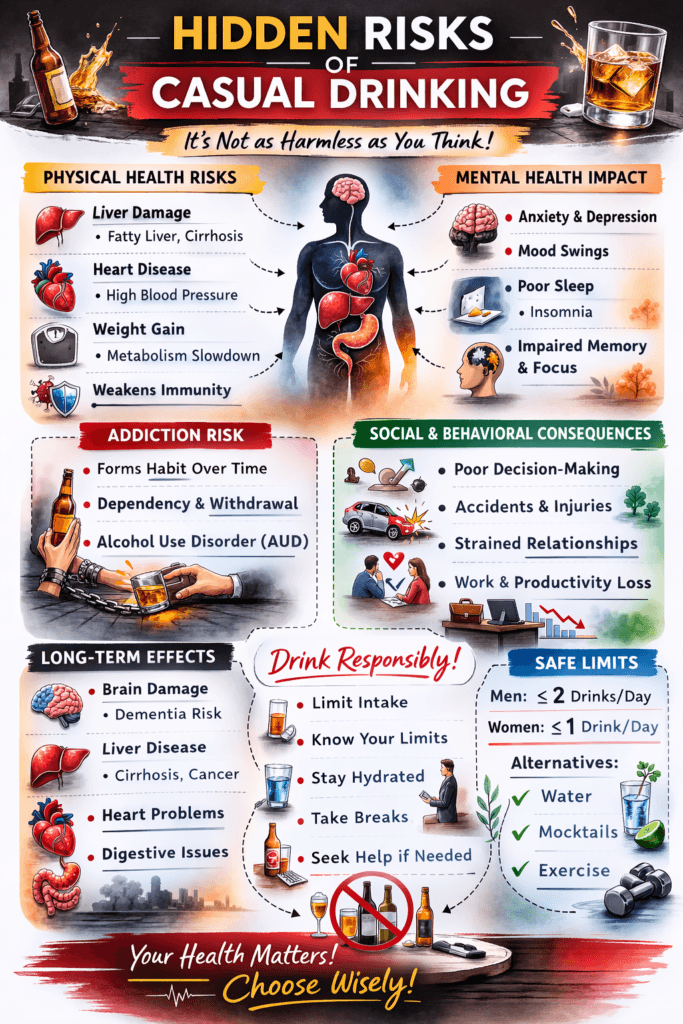
There are tons of warnings about heavy drinking or alcoholism, but casual drinkers rarely get the full picture of how “just a few” drinks can still leave a mark. Here are a few less-talked-about risks that surface more often than people realize:
- Hidden Health Changes: Even moderate alcohol intake can sneakily raise blood pressure, increase cholesterol numbers, or quietly put strain on heart health. Studies show these effects in light and moderate drinkers, not just those who drink heavily.
- Sleep Disruption: A drink or two brings relaxation, but usually means poorer sleep quality. Nighttime alcohol disturbs sleep cycles, leaving you tired and less focused during the day.
- Increased Cancer Risk: Even at low levels, alcohol use is strongly linked to some cancers, especially breast and liver cancers. Risk increases with each drink, but you don’t need to drink much for some risk to show up.
- Mood Swings and Anxiety: Alcohol might help nerves temporarily, but after-effects can include more anxiety and mood swings. These effects can creep in subtly, especially with regular casual drinking.
You don’t need an obvious problem for alcohol to affect your mind or body. Even people who never feel “out of control” may notice these quieter consequences over time.
Casual Drinking Myths A Lot of People Believe
Classic misconceptions keep casual drinking hidden in the background. These are some of the most common I’ve heard—or believed myself in the past:
- “Red wine is good for your heart, so it’s healthy.”
While some research links wine to heart health, experts now agree that potential benefits don’t outweigh the risks. Health organizations advise against using alcohol as any kind of health strategy, as the risks far outweigh the supposed benefits, especially for cancer and liver diseases. - “A few drinks won’t affect me.”
Everyone reacts differently. For some, two drinks change mood or sleep; for others, just one can spark drowsiness or irritability. - “It’s nothing if I’m not drunk.”
Staying clear of drunkenness is a good goal, but even moderate use can cause slow changes in health, like higher blood pressure or building tolerance, even if you never feel obviously affected. - “Taking a break from drinking erases any issues.”
Breaks help recovery, but the effects of regular casual drinking don’t just wipe out overnight. Those habits add up slowly over the years, so it’s about the overall pattern—not just the occasional pause.
How Casual Drinking Sneaks Into Everyday Life
What often happens—and I’ve found myself here before—is that alcohol gradually becomes part of more and more occasions. Start with a couple of drinks on Friday, and soon it’s a nightly glass of wine, cocktails at brunch, or beers during a game. Over time, it becomes background noise, present in most routines rather than an occasional treat.
This makes it easy to drink more often than you think. Alcohol shows up at work events, family dinners, and even professional networking. Choosing not to drink can sometimes feel odd. A quick check-in with yourself: how often does alcohol appear in your week? Sometimes, simply raising your awareness can yield surprising insights.
Practical Signs You Might Be at Risk (Even if You Don’t Think So)
Not every casual drinker is risky, but certain signs hint that it’s worth a review. Here’s what I use as a personal checklist:
- You look forward to alcohol as your end-of-day reward or stress relief almost every time.
- It feels strange or uncomfortable to skip a drink at social events.
- One drink regularly turns into two, without much thought.
- You notice changes—poor sleep, trouble remembering things, or frequent headaches.
- Family or friends mention your drinking, even as a joke.
If two or more of these sound familiar, it could help to think about your relationship with alcohol. You don’t have to quit completely, but being honest with yourself can help keep everything balanced.
Simple Ways to Change Up Casual Drinking
If you’re ready to rethink the habit, here are some straightforward steps I’ve seen help friends (and myself):
- Spot Your Triggers: Is it stress, boredom, or social events that prompt you to drink? Recognizing those helps you plan your next move.
- Switch to Other Rituals: Try herbal teas, creative mocktails, or sparkling water. Keeping your hands busy still gives you a sense of treat without alcohol’s effects.
- Reset Social Expectations: Be open with friends about wanting to cut back—they’re often supportive. Suggest activities that don’t center on alcohol, like brunches without mimosas or morning walks.
- Set Clear Rules: Make yourself guidelines, such as allowing drinks only on weekends or setting a one-drink limit. Apps like Sunnyside or Reframe help track and remind you about your choices.
These tweaks can be surprisingly effective, and inviting friends into the challenge can make it feel less lonely or awkward.
Real-World Effects of Cutting Back
I’ve noticed that cutting back on casual drinking brings plenty of benefits. Friends who’ve tried “sober curious” for months or trimmed their routine for a fitness goal talk about better sleep, steadier moods, improved skin, sharper focus, and greater overall energy. Social outings don’t suffer—I’ve sampled nonalcoholic beers, unique mocktails, and nifty zero-proof drinks to keep things lively. Some even tell me relationships improve, with fewer miscommunications or awkward texts at night.
- More Focus and Productivity: Being clearheaded in the morning means you’re far more productive, whether at work, school, or on personal projects.
- Better Overall Health: Reducing alcohol leads to fewer headaches, less stomach upset, and can help manage weight.
- Saved Money: Alcohol isn’t cheap, especially fancy cocktails or wines. Cutting back can free up surprising savings over a few months.
- More Genuine Social Time: Good conversations aren’t reliant on a glass in your hand—sometimes the best talks happen over coffee or a mocktail.
If you want to dig deeper into the data, check out organizations like the NIAAA and the National Cancer Institute, both of which lay out extensive research on health benefits from reducing alcohol intake. They are good places to start if you want a super detailed look at the numbers and real-world effects.
Frequently Asked Questions
Here are some of the real questions readers and friends often ask about casual drinking:
Doesn’t everyone drink a little? Why worry?
This habit is super common, but that doesn’t mean it’s risk-free. Paying close attention to your own habits and how your body responds goes a long way toward protecting your well-being over time.
Is there a truly safe level of alcohol?
According to recent research, no amount of drinking is completely without risk. Some people weigh the risks and decide it’s not worth it. Others may aim for mindful moderation, but it’s important to know that “safe” amounts aren’t the same for everyone, and there is always some risk.
How do I know if my casual drinking is creeping up to a problem?
If you notice you’re drinking more often, find it hard to stop, or have family and friends mention their concern, it’s a good idea to check in with a medical professional or try a self-assessment, like the one on NIAAA’s Alcohol Quiz.
Final Thought: Mindful Drinking Makes a Difference
Because casual drinking is so normalized in how we unwind or gather, it’s easy to ignore possible risks. Checking your habits, being honest, and trying new (alcohol-free) routines keep your body and mind strong. Mindful drinking isn’t about saying goodbye to a good time; it’s about making choices that give a boost to your overall health and happiness for the long haul.
Video: The Hidden Damage From Drinks You Thought Were Safe #AlcoholAwareness #HealthFacts