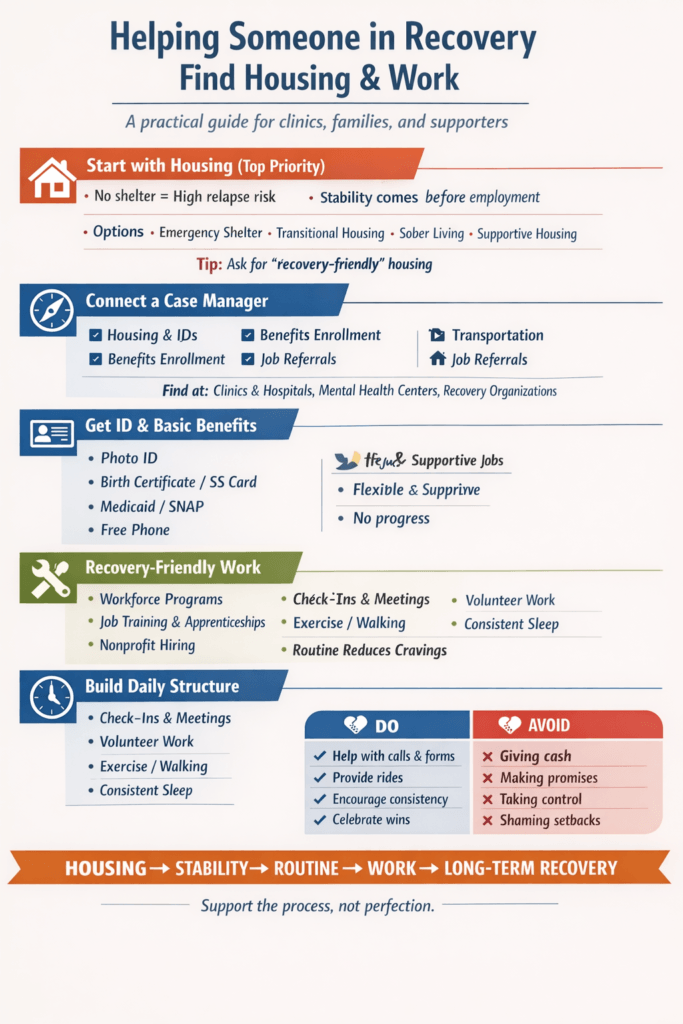
Helping someone in recovery find stable housing and meaningful work can completely change their journey for the better by creating safety, routine, and a renewed sense of purpose. These two foundations support sobriety by reducing stress, increasing independence, and strengthening confidence during a vulnerable time. While it can feel overwhelming to know where to begin or how to offer the right kind of support, small, informed steps can make a powerful difference. With patience, encouragement, and practical guidance, families and supporters can help remove barriers that often stand in the way of progress. This guide walks you through what truly matters when helping a friend, family member, or loved one build stability, dignity, and momentum in recovery.
Why Housing and Work Matter in Recovery
Finding a safe place to live and a job that brings some stability are both significant for anyone working toward long-term recovery. Without housing, routines become harder, and the constant stress of not having a place to call home can make recovery much tougher. The same goes for finding work; a job builds confidence, provides structure, and helps people feel connected to their communities.
Organizations like the Substance Abuse and Mental Health Services Administration (SAMHSA) mention these as the foundation of recovery because housing brings security, while employment supports independence and growth. If you’re trying to help someone, getting these basics covered helps remove some of the hurdles they might face every day. Housing and work are not just needs—they are stepping stones to rebuilding a sense of purpose, safety, and dignity. Remember, the stability these bring creates an environment where a person can focus on healing and growth.
Getting Started: Understanding Your Loved One’s Needs
It’s important not to assume you know what someone wants or needs. Ask open-ended questions and really listen when they share their goals or any concerns about housing or work. Not everyone in recovery is ready for a new job yet; some may need more time or a different pace, while others might be eager to reconnect with their career right away. The same goes for housing. Some people want independence, and others may need more support, such as group living or sober housing.
- Listening: Let your friend explain what they feel ready for, what makes them nervous, and what positive changes they want to see.
- Safety First: Make finding a safe and substance-free environment a priority to support ongoing recovery.
- Respecting Choices: Some people value privacy, while others feel safer in group settings. It’s all about what feels right for them.
Steps to Finding Recovery-Friendly Housing
Searching for housing can be overwhelming, especially if recovery is new or if someone has limited income, legal issues, or a history of evictions. I’ve gathered a few steps and resources that can smooth the way.
- Explore Sober Living Homes: These are group homes that support people in recovery. They offer peer support and accountability, which can make it easier to stick to routines. The National Alliance for Recovery Residences (NARR) lists many state-level directories worth checking out.
- Consider Transitional Housing: Provided by some nonprofits and local agencies, these programs bridge the gap between rehab and independent living. They come with guidance, rules, and support as someone gets back on their feet.
- Check with Local Housing Agencies: Many cities offer subsidized or low-income housing programs. Although waitlists can be long, applying early gives more options.
- Work With Local Recovery Centers: Recovery community organizations are super helpful; they often know about current local housing options, emergency shelters, or landlords who rent to people in recovery. They can also recommend community resources for rent or utility assistance.
Pitfalls can come up with housing. There can be upfront costs, paperwork, or landlords hesitant to rent to people with a history of addiction. Support and encouragement make a difference here. If possible, offer help with filling out applications or reaching out to housing agencies together. Sometimes, a letter of support from a counselor or recovery sponsor can also help open doors.
Tips for Landing a Job During or After Recovery
Job hunting adds another layer of anxiety for anyone, but it’s especially tough when you’re working through recovery. Some people worry about gaps in their resumes or how to explain periods of unemployment. Others might feel nervous about being judged if they’re upfront about their recovery.
There are a few different paths and resources to share:
- Start with Employment Services: Many regions have employment offices that offer job training, resume help, and placement programs for people in recovery or with legal records. Vocational counselors can walk someone through the process step by step.
- Recovery-Friendly Employers: Some companies openly hire people in recovery and even support recovery programs at work. Look for local lists or ask recovery organizations if they can suggest recovery-friendly employers willing to give someone a chance.
- Temp and Gig Work: Flexible or short-term jobs are a good way to build up work experience and confidence without the pressure of a big commitment right away. These jobs also help bridge employment gaps and may grow into permanent roles.
- Network in the Recovery Community: Word of mouth in 12-step meetings, recovery groups, or community events often leads to job openings or work leads you won’t see posted elsewhere. Sometimes, someone in the group may directly recommend your friend to a local employer.
Depending on your loved one’s background, they may face barriers to employment, such as a criminal record or a lack of recent experience. Career One Stop, sponsored by the U.S. Department of Labor, offers helpful guides and local contacts for these situations. Don’t forget about local workforce development boards and community colleges—they often offer programs to help people in recovery build job skills and secure placement.
Common Barriers and How to Support Someone Through Them
- Background Checks: Not all employers or landlords are willing to overlook a history of addiction or arrests. Some nonprofits or legal aid groups help with record expungement or knowing your rights. A little research can lead to options that feel less discouraging. It’s important to stay positive and keep looking, as some employers are more open-minded than others.
- Financial Stress: Things like security deposits or lack of transportation get in the way. Explore rental assistance, moving grants, or discounted transit programs. Encourage your loved one to ask about flexible payment plans or relay rides through community programs. Family members can also collaborate by pooling resources or connecting with social services for financial guidance.
- Discouragement: Rejections or long waiting periods are standard, and it’s easy to feel like giving up. Stay supportive, keep searching for new leads, and celebrate the small wins along the way. Remind your friend that every attempt brings them closer to the right fit, and setbacks are a natural part of the process.
Document Prep: A Quick To-Do List
Helping your friend or loved one gather the proper paperwork saves a lot of hassle. Here’s what usually comes in handy:
- Identification (driver’s license, state ID, or passport)
- Proof of income or benefits (pay stubs, bank statements, SNAP or Medicaid cards)
- References—personal or professional (letters from sponsors or counselors are helpful!)
- Resume or job application information
You can also help by organizing these documents in a folder or binder, making it easy to grab for any interviews or appointments. Keep copies handy in case something gets lost.
Building a Support Network
No one does recovery alone. Friends, family, caseworkers, mentors, and even other people in recovery play a huge role. Connecting with organizations like Oxford House, local sober living groups, employment specialists, or housing agencies brings fresh ideas and motivation.
Sometimes all it takes is a supportive text, lifting someone’s mood after a setback, or offering to drive them to an interview to make a difference. Even just being a steady listener goes a long way in easing the stress of housing and job searching. Being part of a support network can keep your loved one motivated and accountable and help them know they’re not facing things alone. Joining skill-building groups, faith-based organizations, or sports teams in the local area can also add positive energy and social connections to their routine.
Advanced Tips to Boost Success
Once the basics feel a little more secure, there are extra steps to help keep things moving forward:
Focus on Success Habits: Encourage daily routines, goal setting, and small weekly check-ins. Keeping commitments, getting enough sleep, and celebrating small victories help build long-lasting change. Consistent sleep schedules, balanced meals, and regular exercise can boost feelings of stability and hope.
Help With Skill Building: Free online courses, workshops at recovery centers, or local library training (like computer basics) can build confidence for new jobs or independent living. Encourage participation in classes that match their interests, whether it’s art, cooking, or learning a new language—these can open doors to new work or housing opportunities down the road.
Explore Volunteer or Intern Opportunities: If your friend isn’t finding paid work right away, volunteering is a great way to gain experience, make connections, and fill resume gaps. Community service not only boosts their job prospects but also builds self-esteem and a sense of purpose.
Look for Peer Support or Advocacy Groups: These add another layer of motivation, and may even lead to paid peer recovery specialist roles down the road. Peer support groups often have mentorship programs, resource directories, and ongoing workshops for job and housing preparation.
Don’t hesitate to encourage lifelong learning and self-care as part of the recovery routine. Workshops on financial literacy, mindfulness, and communication skills can all add to success in securing housing and work.
Real-World Examples of Recovery Success
- Transitional Housing: I’ve seen people thrive after moving from inpatient rehab into sober living. Shared spaces offer affordable rent and accountability, and residents support each other’s job-search efforts. Everyone celebrates when someone lands their first steady job or gets their own apartment.
- Reentering Work Slowly: A friend I supported started volunteering at a local food pantry. This helped them build new routines and confidence. Within a couple of months, they landed a part-time grocery store job, which set them up for full-time work later on.
- Using Local Mentors: Many communities have peer recovery specialists who guide people through housing applications, job interviews, or even just adjusting to living independently.
Frequently Asked Questions
What’s the best type of housing for someone in recovery?
There’s no single answer. Sober living houses provide peer support, while some people do better in independent apartments. Budget, support needs, and recovery goals will shape what works best.
How can I help someone with a criminal record find a job?
Help them connect with workforce agencies that have programs for people with records. Legal aid attorneys can sometimes guide the expungement process as well; checking with local nonprofits can offer more specific legal help.
Is it okay to share a recovery history with future landlords or employers?
It’s a personal decision! Some folks find honesty opens doors, while others prefer to keep it private. It’s always fine to focus on skills and future goals instead of past mistakes; there’s no one correct answer, just what feels safest for the job or apartment application your loved one is pursuing.
Final Thoughts
Supporting a friend or loved one through the challenges of recovery housing and job searching isn’t always simple, but each effort adds up. A little practical help, encouragement, and connection to the right resources make the process smoother. Even simple actions like helping fill out paperwork, finding a sober community, or cheering small victories can be the boost someone needs to keep going. And remember, the road to stable housing and work is rarely quick or straight, but every little step taken brings your loved one closer to feeling safe, secure, and hopeful about the future.
Video: How to Actually Help Someone in Recovery #addiction #support #recovery