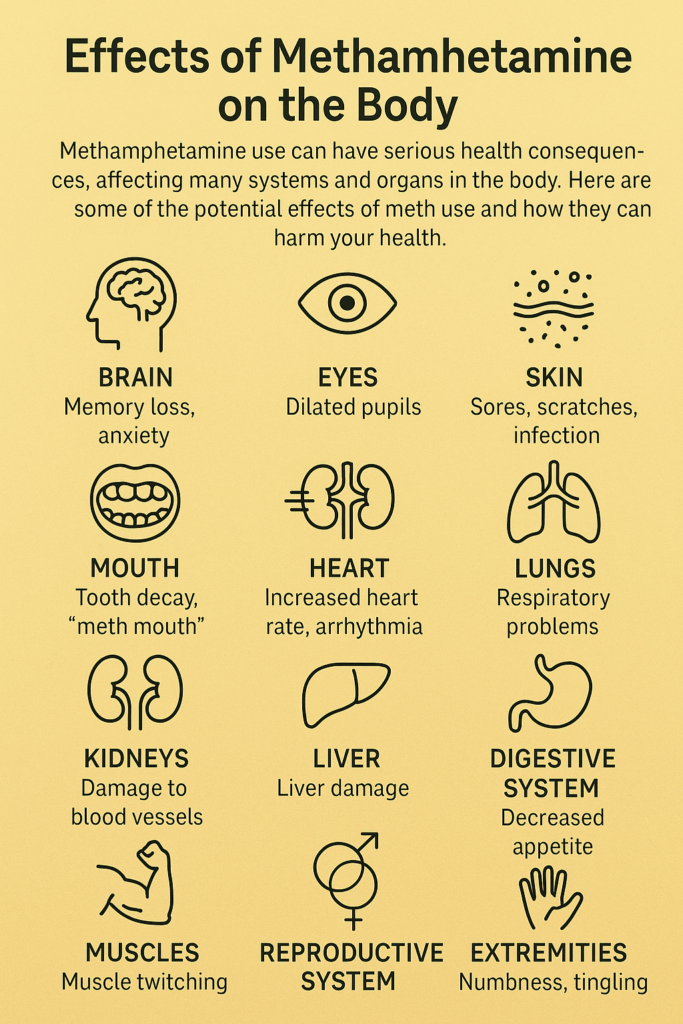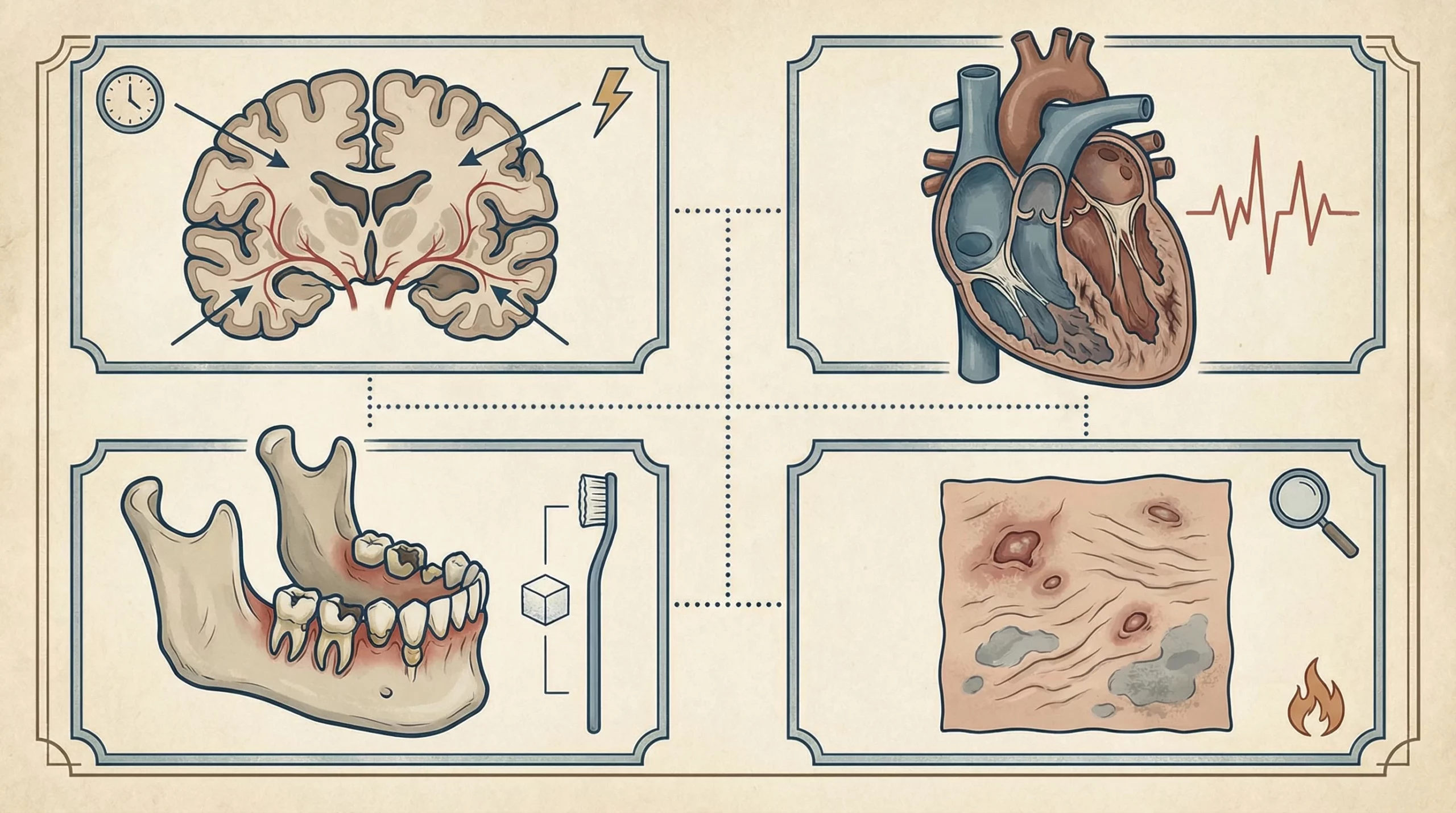
Methamphetamine, or meth, is one of the most dangerous and addictive drugs, and its effects go far beyond the intense rush that draws many people in. Even after a few uses, meth can disrupt nearly every major system in the body—impacting the brain, heart, skin, teeth, and overall physical and mental health. While people often seek meth for its burst of energy or euphoria, it triggers chemical changes that lead to serious short- and long-term consequences. These effects can develop quickly, causing damage that’s hard to reverse and sometimes permanent. Understanding what meth does inside the body highlights why this drug is so risky and why early awareness matters.
How Methamphetamine Acts in the Brain and Body
Methamphetamine is a powerful stimulant. It speeds up the central nervous system, which messes with how your brain communicates with your body. Meth floods the brain with dopamine, a brain chemical that plays a significant role in feeling pleasure, motivation, and reward. The initial high can feel super intense; users report feeling energized, alert, or even invincible. But this comes at a high price.
After that rush, the brain’s natural balance gets thrown off. Over time, meth damages the system that produces and manages dopamine. The brain starts to struggle to feel pleasure from anything besides the drug. This cycle often drives people to keep using meth, building up tolerance and making addiction even more likely.
Physical Effects on Key Body Systems
Meth doesn’t just mess with your mind. Once it’s in your system, it spreads quickly and affects all organs and body systems. Here are some significant ways meth changes how the body works:
- Heart and Blood Vessels: Meth speeds up the heart rate and raises blood pressure. Over time, this strains the heart muscle, stiffens the arteries, and increases the risk of heart attack, stroke, or dangerous irregular heartbeats.
- Teeth and Mouth: One of the more visible effects is “meth mouth.” This includes severe tooth decay, gum disease, cracked teeth, and chronic bad breath. Meth reduces saliva and encourages teeth grinding, plus users often skip basic dental care.
- Skin and Appearance: Many meth users develop sores or pick at their skin because of a sensation called “meth mites.” The drug causes blood vessels to constrict, which means wounds heal slowly and skin can take on a dull, unhealthy look.
- Lungs: Smoking meth brings toxic chemicals into the lungs. This raises the risk of infections, chronic coughing, and even lung damage that can lead to trouble breathing or other health problems.
- Immune System: Regular use weakens the immune defenses, making it way easier to catch infections. Your body’s ability to fight off viruses or bacteria drops off, which can turn minor illnesses into major problems over time.
The far-reaching damage means people using meth run into health problems much quicker than they might expect with many other substances.
Short-Term Effects on Health and Behavior
Even after a single use, meth can take a toll on both physical health and behavior. Here are just some of the more immediate effects you might notice or hear about:
- Lack of Appetite: Meth tends to kill appetite, so people on the drug usually eat much less, which may quickly lead to weight loss and malnutrition.
- Insomnia and Restlessness: Staying awake for days at a time isn’t uncommon, leading to sleep deprivation that damages both mood and thinking ability.
- Increased Activity: The surge in energy makes users fidgety, overactive, or even agitated, leading to risky or impulsive behavior. This hyperactivity can lead people to engage in dangerous activities or make poor decisions they wouldn’t otherwise consider.
- Paranoia and Irritability: Meth can mess with perception and mood, sparking paranoia, anxiety, or anger, even after a single dose.
- Rapid Heartbeat: A pounding heart or an irregular pulse can occur even at low doses.
While these effects might seem like they’ll fade when the drug wears off, repeated use tends to make them more severe and longer-lasting. Occasionally, one dose can lead to very unpredictable or even dangerous behavior, especially if mixed with other substances.
Long-Term Consequences: What Chronic Meth Use Does
The longer someone uses meth, the more complex the drug is on the body. Serious long-term effects build up with chronic use. These can last months or years, even after quitting. Here’s what can happen with repeated exposure:
- Memory and Thinking: Meth rewires parts of the brain responsible for memory, focus, and decision-making. People often notice trouble remembering things, poor judgment, or brain fog that won’t lift, which can cause ongoing frustrations in day-to-day life.
- Mental Health Problems: Chronic meth use is linked to high rates of depression, anxiety, paranoia, and even hallucinations. Some symptoms can stick around long after stopping the drug, making daily life more challenging even in recovery.
- Permanent Dental and Skin Damage: Once teeth and gums are destroyed and skin is covered in scars, recovery is tough and often requires medical or dental intervention. Jaw and facial bone damage may result from untreated infections.
- Heart and Blood Vessel Problems: The ongoing strain on the heart, blood vessels, and brain can lead to heart disease, strokes, or sudden cardiac events. The likelihood of these problems climbs with every year of use.
- Infectious Disease Risk: Sharing needles or unsafe sex under the influence can raise the risk of diseases like HIV or hepatitis. Living a healthy life becomes much trickier if these serious infections develop.
Long-term meth use can also have social costs, such as problems with employment, legal difficulties, or strained relationships. The drug can gradually take over critical areas of a person’s life, with consequences that last even after stopping use.
Common Challenges for Recovery and Healing
Breaking free from methamphetamine isn’t just about resisting the craving. The withdrawal and recovery process comes with severe physical and mental challenges:
- Withdrawal Symptoms: Mood swings, intense depression, anxiety, tiredness, and cravings can all hit hard when stopping use. Some people also report vivid dreams or nightmares that can make sleep difficult.
- Slow Healing: Damage to organs, the immune system, and the brain usually doesn’t bounce back quickly. Full recovery might take years, and some health problems never totally heal. Physical healing goes hand in hand with emotional support, which is crucial for lasting success.
- Relapse Risk: The way meth changes the reward system of the brain makes relapse way more likely compared to some other drugs. Many people benefit from structured rehab programs or outpatient counseling to lower the risk and gain new coping skills.
Support from medical professionals and addiction counselors makes a big difference. Treatments might include therapy, group counseling, medical care, and sometimes medication to help with withdrawal and long-term healing. Staying connected, finding healthy outlets for energy, and building a strong support system are all key steps to rebuilding a life free from meth.
What to Watch For: Signs of Meth Use and Overdose
Recognizing meth use early can help someone get support before things spiral out of control. Some warning signs include:
- Dramatic weight loss and loss of appetite
- Bad teeth or sudden dental issues
- Constant picking at skin or new wounds that won’t heal
- Unusual bursts of energy, agitation, or paranoia
- Staying awake for long periods, then crashing hard
An overdose can be very serious, sometimes deadly. Signs include chest pain, trouble breathing, high fever, severe agitation, or loss of consciousness. If you notice these symptoms in someone, getting emergency help right away is really important. Quick action could save a life, primarily since meth can raise the risk of heart attack or stroke dramatically.
Frequently Asked Questions
Curiosity or concern about meth’s effects is pretty standard. Here are answers to a few questions people often ask:
Question: Can meth use permanently damage your brain?
Answer: Meth can change wiring in the brain, especially in areas tied to memory, emotion, and self-control. Some of these effects get better over time if someone stops using, but long-term or heavy use may leave lasting changes that don’t fully heal. Brain scans have shown that these changes can last long after someone quits.
Question: Why do teeth rot so quickly with meth?
Answer: Meth reduces saliva (which protects your teeth) and makes people grind their teeth, plus it encourages skipping dental care. This combo leads to rapid decay and gum disease. On top of that, sugary sodas or snacks eaten during a binge can make matters worse for your mouth.
Question: Is recovery from meth addiction possible?
Answer: Recovery takes time and support, but it is absolutely possible. Medical care, therapy, and a supportive community play a big part. Many have successfully rebuilt healthy lives even after long-term meth use. Treatment programs that address both mental and physical health provide the best chances for lasting recovery.
Final Thoughts
Methamphetamine use can affect every system in your body, from your brain to your heart to your teeth. The risks go way beyond that first high; you’re looking at a drug that can make permanent changes to both physical and mental health. Recognizing the signs and understanding how meth works helps people get help sooner and gives hope for recovery, even when things feel tough.
Video: What Meth Actually Does to Your Body #HealthFacts #Animation