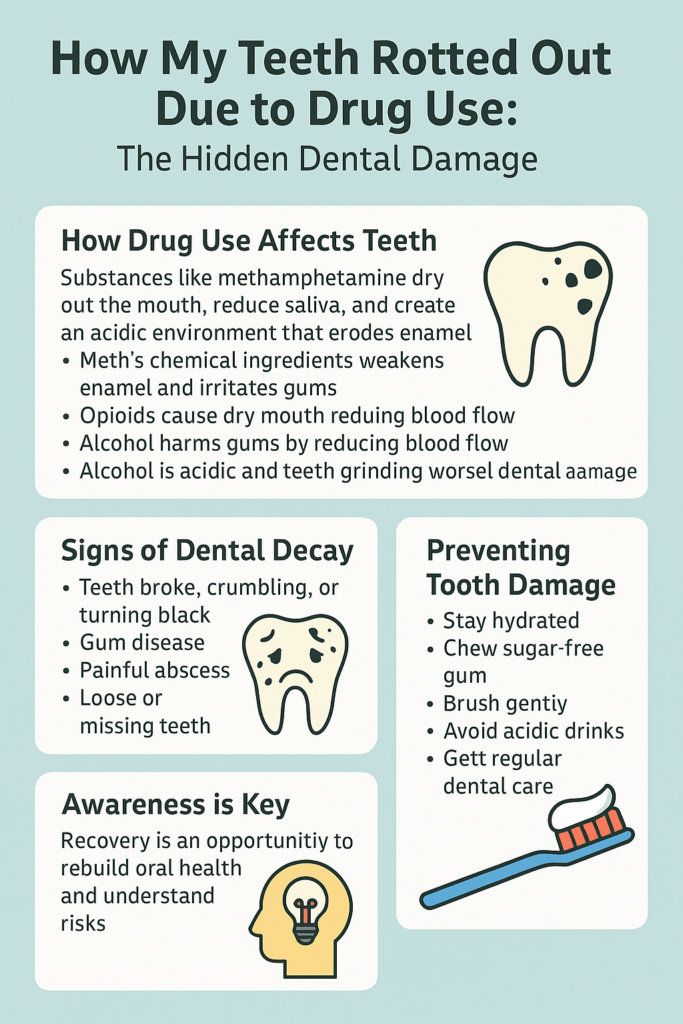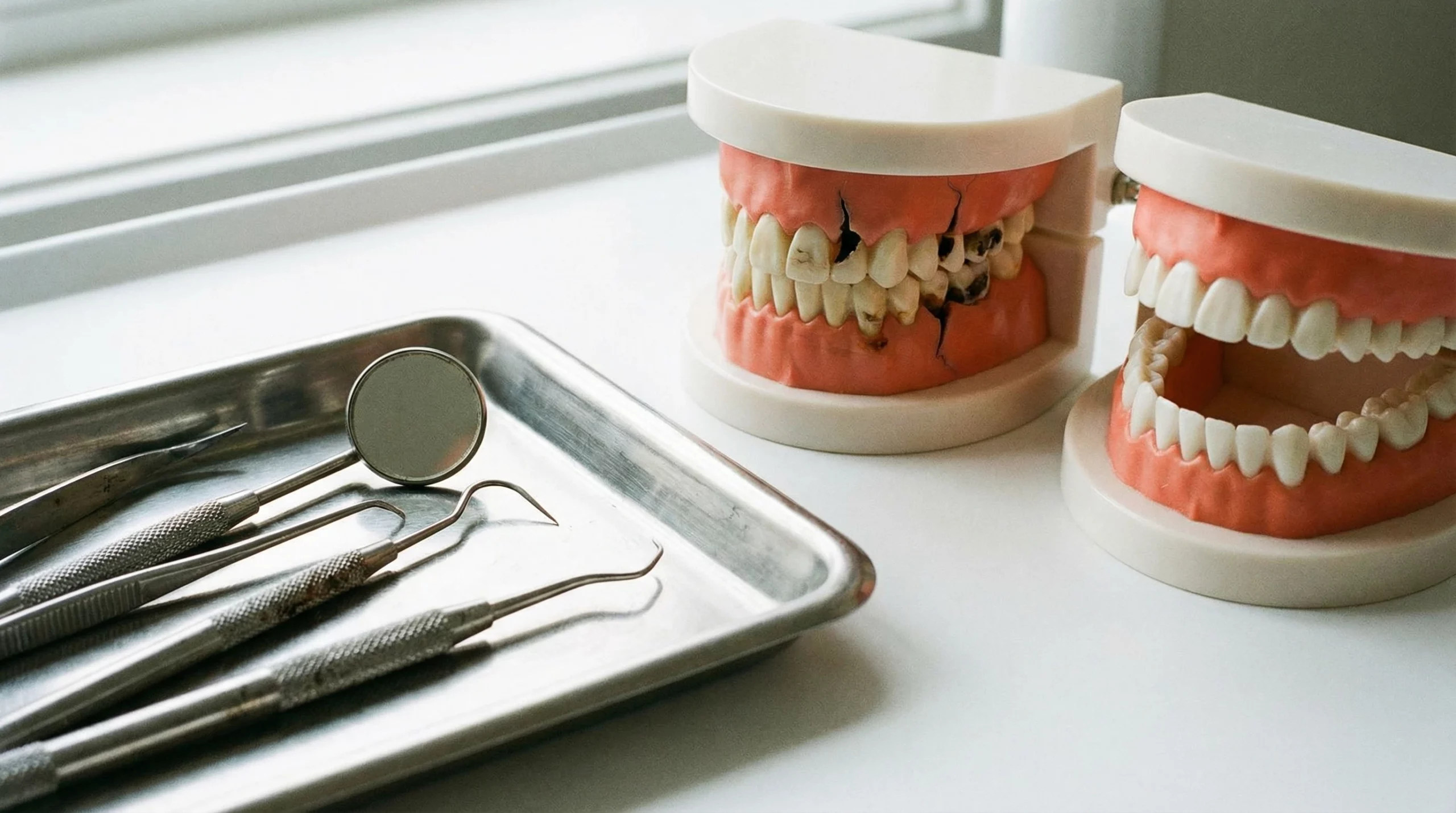
Drug use and its impact on oral health come up more often than people expect, especially when teeth or gums start acting up after substance use. Dental damage is common but often overlooked because attention usually goes to more obvious symptoms. Substances like methamphetamine, opioids, cocaine, cannabis, alcohol, and even some prescriptions can dry out saliva, weaken enamel, inflame gums, and cause fast-moving tooth decay. These problems can lead to infections, chronic pain, difficulty eating, and long-term health issues. Understanding what happens in the mouth when drugs are involved—and why early care matters—helps people take steps to protect or restore their oral health and support themselves or loved ones in recovery.
How Drug Use Damages Teeth and Gums
Teeth and gums are more delicate than people realize. Drugs, whether legal or illegal, can mess with your mouth in several ways, sometimes without you even noticing right away. It’s not just about cavities; drug use can bring on gum disease, tooth loss, and even jawbone problems that get harder to fix the longer they continue. These issues make eating, speaking, and even smiling painful or embarrassing, which can affect your mood and your confidence in social settings.
For a quick example, methamphetamine (meth mouth) is notorious for wrecking teeth quickly, but it’s not the only drug that can harm your mouth. Even some prescription medications, when misused or combined with other substances, can dry out your mouth, lower your immunity, and set the stage for all sorts of dental issues to show up. Other recreational drugs can have similarly harmful effects, mainly when mixed or used over long periods.
A person doesn’t have to use drugs for years to see dental damage, either. I’ve seen cases where a few months of heavy use led to painful sensitivity, cracked teeth, and swollen gums. The type of drug, how often it’s used, and your personal health make a difference, but pretty much every commonly misused drug has some effect on oral health. Even binge drinking on weekends or casually using party drugs a few times a month can trigger early warning signs.
Common Drugs That Cause Dental Issues
I’ve put together a list of substances that most often appear linked to dental problems. If you’re searching for answers because of damage you or someone you know has noticed, chances are one of these is involved:
- Methamphetamine: This drug causes severe dry mouth, intense cravings for sugary drinks, tooth grinding, and risky oral hygiene behavior. The result? Rapid cavities, broken teeth, and gum infections can develop quickly.
- Cocaine: Cocaine is acidic, and when rubbed on gums (a common practice), it can cause ulcers, gum recession, and tooth erosion. Snorting cocaine also dries out your mouth and sinuses, making gum disease more likely.
- Opioids (like heroin or prescription painkillers): These lower the immune system, slow down saliva production, and cause cravings for sweet foods. Gum disease and tooth decay are common.
- Alcohol: Heavy alcohol use brings dry mouth. This increases cavity and gum risk. Many drinks are acidic or high in sugar, contributing to enamel erosion and decay.
- Marijuana: While not as dramatic as meth, frequent marijuana use leads to dry mouth and increases gum disease risk. It has also been linked to more plaque and tartar on the teeth.
- Tobacco (smoked or smokeless): Not always thought of as a “drug,” but it absolutely is. Smoking or chewing tobacco stains teeth, irritates gums, and boosts the risk of oral cancer and gum disease. The effects can linger even after quitting, making regular dental care critical.
Even prescription medications appropriately used can cause “dry mouth” (the term is xerostomia) or change the mix of oral bacteria, so it’s worth asking your doctor or dentist about side effects if your mouth suddenly feels different. Antibiotics, antihistamines, and antipsychotics may all cause issues, too, so it’s smart to check in if you notice changes in your teeth or gums.
What Happens to Your Mouth When You Use Drugs
The ways drugs impact your mouth have as much to do with how the substances affect the body as the drugs themselves. Here’s what I typically see happening in the background:
- Dry Mouth: Most drugs, especially meth, opioids, and many prescription antidepressants, reduce saliva. Saliva is essential for neutralizing acids and rinsing away food. Without enough, the risk of cavities and gum infections goes way up.
- Weakened Immune Response: Drugs can lower the body’s ability to fight infection, giving oral bacteria free rein, especially around the gums. Infections may set in faster, taking longer to heal.
- Behavior Changes: People using drugs might skip brushing or flossing, binge on sugar, or grind their teeth (sometimes without knowing it). This breaks down enamel and makes decay or injury more likely.
- Erosion and Chemical Burns: Some drugs are acidic or harsh and directly wear down enamel. Cocaine, in particular, can burn gum tissue and enamel, while meth can create sores and ulcers as well.
- Vascular Changes: Some drugs boost blood flow, causing swollen gums that bleed easily; others shrink blood supply, leading to pale, dying gum tissue. Either way, the mouth structure suffers.
The effects can show up quickly or take months, depending on the type of drug and your overall health. Sometimes, the changes are subtle, like gums that bleed more easily, but can quickly worsen if ignored. Regular dental checkups are key to catching issues early.
Early Warning Signs to Watch For
I find that spotting dental issues early makes them a lot easier and cheaper to treat. Watch for these warning signs if you think drug use might be affecting your mouth:
- Stubborn bad breath, even with daily brushing
- Sores, ulcers, or white patches that don’t heal
- Bleeding, red, or sensitive gums
- Teeth that suddenly hurt when eating or drinking
- Chipped, cracked, or suddenly loose teeth
- Jaw pain from frequent grinding
Dental pain might seem minor at first, but it can spiral quickly into infections or issues that cost way more to fix if they’re ignored. Taking a few minutes to look at your mouth in the mirror every week can help you spot problems sooner and get help before they worsen.
How to Minimize Dental Harm While Recovering
Deciding to quit or cut back on drug use is a big step, but there are practical things you can do at any stage to protect your teeth and gums. Here are moves that really help—whether you’re still using or working toward recovery:
- Stay hydrated: Water keeps your mouth moist, rinses away sugars, and helps saliva do its job. Dry mouth makes things worse, so sipping water throughout the day is super important. If you find it hard to keep sipping water, try keeping a reusable bottle nearby.
- Skip sugary drinks and snacks: If cravings hit, try to swap soda or candy for nuts, cheese, or veggies. This gives your teeth a break from constant sugar attacks and supports healing.
- Brush gently, twice a day: If your gums or teeth are sensitive, use a soft-bristle brush and fluoride toothpaste. Brushing too hard can make gum problems worse, so be careful not to hurt the tissues.
- Floss daily: Even if your gums bleed or feel sore, gentle flossing keeps things under control and helps heal swollen gums. Try waxed or easy-glide floss if regular floss is uncomfortable.
- See a dentist regularly: Even if it’s been a while, a dentist can spot early trouble and help set up a treatment plan. They’ve heard it all, so there’s no reason to be embarrassed. You might also be able to find clinics with experience in substance use recovery that offer extra supportive staff.
- Talk to your doctor about saliva substitutes or sugar-free gum: These might help make dry mouth more bearable and step up your body’s natural defenses. Chewing gum with xylitol is a bonus for fighting bacteria.
Caring for teeth during recovery doesn’t have to be perfect; doing something is better than nothing, and minor improvements add up. Even just rinsing your mouth with water after a meal or snack can make a difference for your gums and teeth.
A Real-world Example: Meth Mouth Explained
If you’ve heard the term “meth mouth,” you might wonder if it’s exaggerated. It’s actually a pretty clear example of what happens when drug use meets oral health neglect. Crystal meth is super acidic and dries out the mouth completely. Most people using meth crave energy drinks or soda, which piles on sugar and acid. On top of that, tooth grinding gets intense, breaking down both teeth and gums.
Within a year of heavy meth use, it’s common to see blackened, broken, or missing teeth, swollen or bleeding gums, and even bone loss. Most dentists can spot the signs right away and may ask about substance use if these patterns show up. If left untreated, infections from meth mouth can even spread beyond the mouth, affecting other parts of the body and causing serious complications.
The critical thing to remember is that, even in these situations, help is out there. Treatment takes work and some patience, but I’ve seen plenty of people get their smile back, even after heavy drug use. Early intervention works best, and dental teams are ready to support people in recovery.
Frequently Asked Questions
Questions about dental health and drug use come up all the time. Here’s what people usually want to know:
Question: Can dental damage from drugs be reversed?
Answer: Some damage, like cavities or gum disease, can be treated if caught early. Severe cases (such as lost teeth) may require additional repairs, such as crowns, dentures, or implants. A dentist can recommend the best fix for your unique situation so you can get back to eating, talking, and smiling without discomfort.
Question: How long does it take for teeth to show damage after starting drugs?
Answer: It depends on the drug, dose, and personal habits. Meth or cocaine can cause visible damage in just months, while others may take longer—dry mouth and skipping dental care speed up problems. If you notice changes, check in with your dentist as soon as you can for advice and early treatment.
Question: Will a dentist know if I use drugs?
Answer: Dentists often spot patterns (like certain types of decay or gum injury) linked with some drugs, but they won’t know for sure unless you share your history. Honest conversations mean you’ll get better, safer care, and they may also have resources or suggestions for recovery support.
Why Dental Recovery Is Part of Overall Health
Sometimes drug use and dental damage feel like two different worlds, but they overlap much more than people realize. Taking action on oral health isn’t just about feeling less pain or smiling again; it’s a real part of overall recovery.
Brushing, flossing, and seeing your dentist while working on ditching drugs supports your body’s healing. Even small changes in your daily routine can make a difference in how you feel, look, and recover. There’s always hope and help for getting your mouth and your life back on track. If you’re unsure where to start, reach out to a trusted dentist, doctor, or recovery program. Your oral health and overall well-being are connected, and you deserve to feel your best moving forward.
Video: This Addiction Destroyed My Smile Completely #consequences #teeth #sobering