If you’re like most people, there’s probably something in your daily routine that gives you a little boost of energy or helps you focus. While these stimulants can be handy if you need a quick wake-up call or to get through a tough day at work, some actually have a track record of causing dependency. Understanding how these common daily stimulants work and how easy it is for them to shift from helpful to habit-forming can help balance their benefits against the risks.
Everyday Stimulants: What Are They and Why Do We Use Them?
Stimulants are substances that ramp up activity in your brain and nervous system. The ones you probably run into every day include caffeine, nicotine, and even certain over-the-counter medications. Many of us use these to feel more alert, to wake up faster in the morning, or to power through the afternoon slump.
These stimulants feel pretty harmless, especially since they’re available just about everywhere. But there’s a big difference between casual use and the slippery slope toward dependence. The World Health Organization and numerous health researchers point to rising use of daily stimulants worldwide, especially among adults juggling work, family, and social lives.
It’s easy to see how even a simple cup of coffee or a nicotine vape can switch from a quick pick-me-up to something you rely on to feel “normal.” That doesn’t mean you have to avoid them entirely, but knowing what’s what keeps you in the driver’s seat.
Most Common Daily Stimulants Linked to Addiction
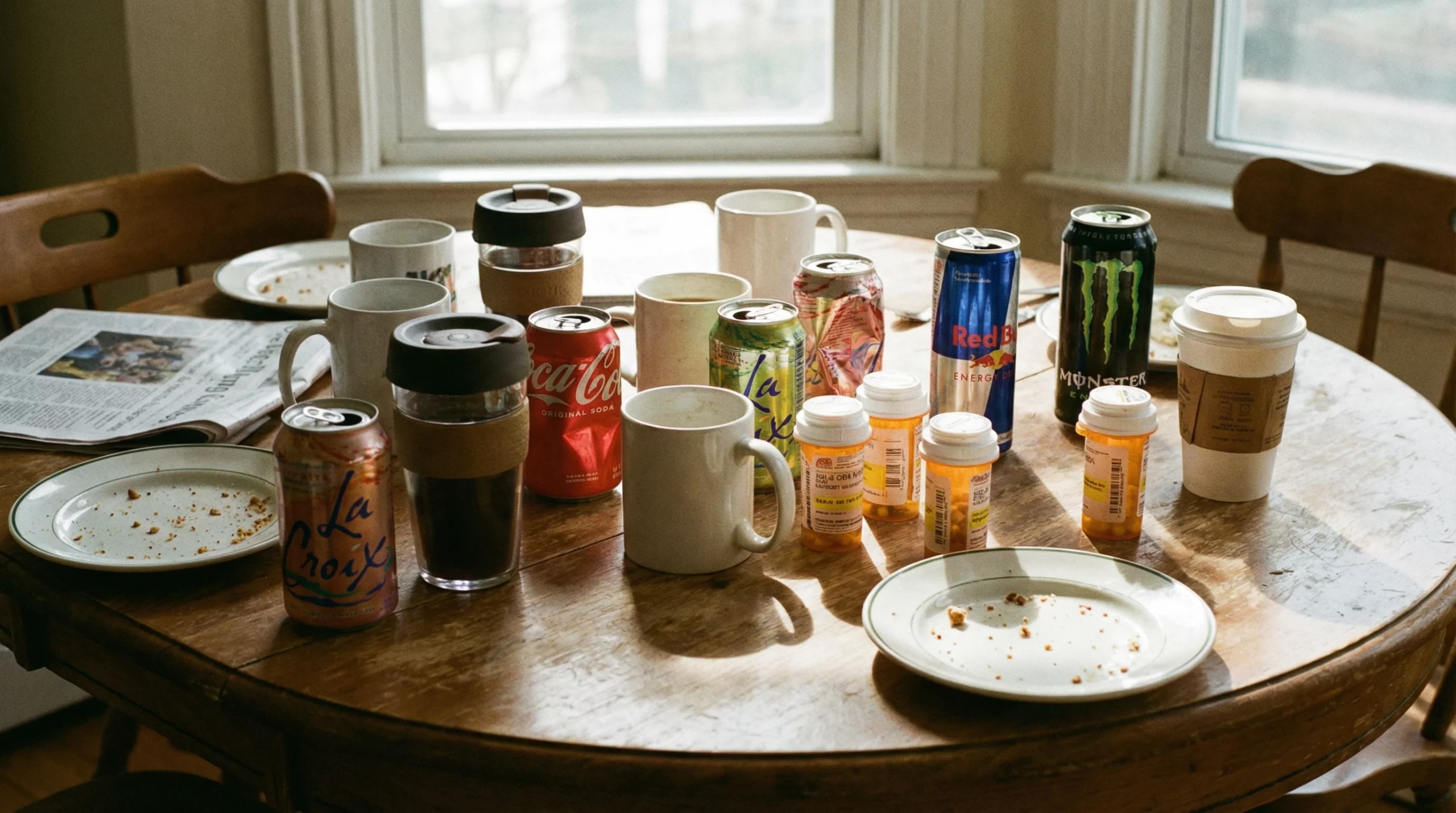
Nearly everyone has one or more of these stimulants in their daily lineup. These are the heavy hitters when it comes to potential dependency:
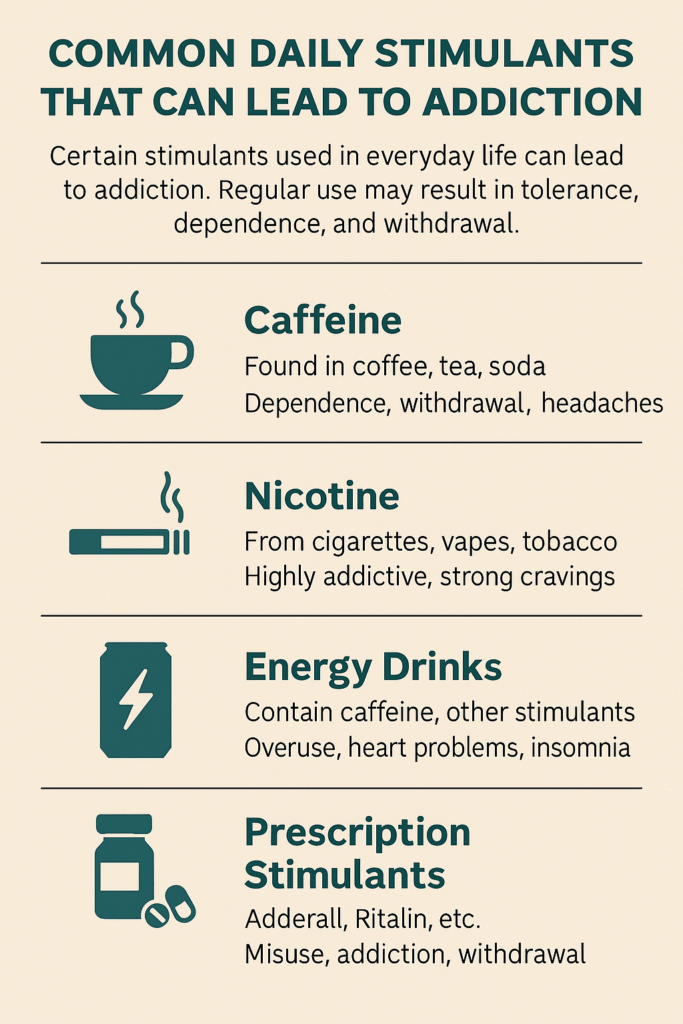
- Caffeine: Found in coffee, tea, energy drinks, sodas, and even some medications.
- Nicotine: Comes from cigarettes, e-cigarettes/vapes, cigars, and chewing tobacco.
- Prescription Stimulants: Includes ADHD medications like Adderall, Ritalin, and Concerta.
- Over-the-Counter (OTC) Stimulants: Ingredients in some cold medicines and weight loss products can have stimulating effects.
How Stimulants Become Addictive
Suppose you’ve ever found yourself needing another cup of coffee to stave off a headache or frustrated that you can’t feel focused without a nicotine hit. In that case, you’ve experienced the first stages of dependence.
Here’s what’s happening. Stimulants increase levels of certain brain chemicals, especially dopamine. Dopamine is the “feel-good” neurotransmitter that can make you feel energized, motivated, and sometimes even a little euphoric. Over time, your brain gets used to the increased dopamine. If you suddenly stop, the brain has trouble finding its balance right away, leading to withdrawal symptoms like mood swings, fatigue, irritability, or even cravings.
Not everyone who has a daily cup of coffee or takes a prescribed stimulant gets addicted, but regular use, especially in large amounts, can train your brain to expect these chemicals. That’s when dependency sneaks in.
Digging Deeper: Daily Stimulants and Their Risks
Each popular stimulant comes with its own effects and potential for addiction. Here’s a closer look at the biggies you’ll find in most homes, schools, and offices:
Caffeine
Caffeine is everywhere: that first thing you reach for when the alarm goes off; the energy boost tucked away in some painkillers, or the icy soda at lunch. While moderate amounts aren’t really an issue for most people (and studies from the CDC show some positive effects like better alertness and even lowered risk for specific health issues), daily caffeine use can quickly add up. Higher intake, or trying to quit suddenly, can leave you with headaches, low mood, and brain fog.
Regular and heavy caffeine use, such as drinking four or more cups of coffee or multiple energy drinks daily, is more likely to build dependency. It’s common to hear people joke about “not being human until I’ve had my coffee,” which is a reminder of how normalized caffeine dependency has become. Cutting back slowly is the most comfortable way to avoid withdrawal headaches and mood crashes.
Nicotine
Nicotine delivers a quick, reliable buzz that’s hard to get from anything else. It stimulates both relaxation and alertness, thanks to its effects on your nervous system. Cigarettes, chewing tobacco, and now vaping devices all give people regular and easy access to nicotine. According to the CDC, smoking and nicotine are some of the most addictive legal substances. Many people start with social smoking or vaping, but regular use almost always leads to cravings and withdrawal when you try to quit. These symptoms can include anxiety, difficulty concentrating, low mood, and irritability.
While some smokers successfully switch to vapes to reduce harm, nicotine in any form can lead to an entrenched habit that’s tough to shake without support, therapy, or medication. The widespread availability of alternative nicotine delivery devices doesn’t necessarily decrease the risk of dependence, and it’s essential to stay aware of your usage patterns.
Prescription Stimulants
Medications like Adderall, Ritalin, and similar drugs are prescribed to help with ADHD and narcolepsy. When taken as prescribed, under medical supervision, these medications are super helpful for people who genuinely need them. The challenge comes when they’re used off-label, often by students or professionals looking to improve concentration or pull all-nighters. This kind of misuse increases the risk of both mental and physical dependence. According to the Substance Abuse and Mental Health Services Administration, prescription stimulant misuse is a rising problem, especially on college campuses.
The brain may begin to rely on these drugs to function at a high level, making it challenging to stop without feeling exhausted or mentally foggy. Long-term misuse can affect heart health, sleep, and even mood stability. It’s also worth noting that these medications have some of the most regulated statuses due to their high potential for misuse and dependence.
OTC Stimulants
Some over-the-counter medications, like certain allergy pills, cold and flu remedies, or weight loss supplements, contain stimulants that most people don’t even realize they’re consuming. Ingredients like pseudoephedrine—a common decongestant—can keep you awake, elevate your heart rate, and, over time, lead to tolerance. Weight loss products with stimulants such as caffeine or synephrine can also become habit-forming, especially if you’re chasing that buzz of extra energy.
Consumers often aren’t fully aware that some everyday products sold in drugstores can contain stimulating chemicals, which is why reading labels is an extra step that can help you manage what’s going into your body.
Things to Watch Out For When Using Stimulants Regularly
Daily use of a stimulant doesn’t guarantee addiction, but there are some red flags that it’s time to rethink your relationship with these substances. Here’s a list of things I pay attention to:
- Increasing Dosage: Needing more to get the same effect can mean you’re building up a tolerance.
- Withdrawal Symptoms: Headaches, irritability, tiredness, or trouble concentrating if you skip your usual dose.
- Using to Cope: Reaching for a stimulant every time you’re stressed, bored, or upset could be a sign of dependence.
- Disrupted Sleep: Trouble falling or staying asleep, especially if you use stimulants into the afternoon or evening.
- Impact on Daily Life: Family, friends, or coworkers comment about your use, or you feel you can’t get through the day without it.
Tolerance and Escalation
One thing I’ve noticed about stimulants is how quickly tolerance can sneak up. When your regular coffee doesn’t cut it anymore, or that vape pen is always within reach, it’s time to assess how often you’re reaching for a boost. If you find yourself gradually drinking more coffee each month or returning more often to nicotine products, pay attention to these changes, as they can signal a developing dependency.
Withdrawal Isn’t Just in Your Head
Withdrawal symptoms add to the challenge of cutting back. Whether it’s a caffeine headache or nicotine cravings, uncomfortable feelings can make you want to give in. Gradual reduction usually leads to a more comfortable adjustment period. Other withdrawal symptoms might include sleep troubles, muscle aches, or mood swings, depending on which stimulant you’re reducing.
Innovative Ways to Manage or Reduce Stimulant Use
If you think a habit is getting out of hand or you’re just curious about cutting back, there are a few strategies that help:
- Switch to Lower Dose Options: Opt for tea instead of coffee or use nicotine replacement therapies. You can also try decaffeinated versions of your favorite drinks to reduce your caffeine intake without losing your routine.
- Set Realistic Limits: Decide ahead of time how much you’ll use and stick to it. Keeping a written log or using a health tracker can help you stay honest and motivated.
- Substitute with Healthier Habits: Get outside for a walk, drink water, or switch up your routine to break the pattern. Short breaks for light exercise or stretching can help reduce the urge for a stimulant.
- Talk with a Professional: If you’re struggling to cut back, a doctor or counselor can offer support, resources, and, if needed, medication to manage withdrawal.
It really helps to remember that everyone’s relationship with stimulants is unique. Finding a balanced approach makes daily life smoother without leaving you feeling dependent on anything to get through the day. If you ever feel stuck or unsure about your habits, don’t hesitate to ask for help or look for community support groups.
Frequently Asked Questions
People have a lot of questions when it comes to daily stimulants and addiction risk. Here are a few I hear most often:
Question: Are caffeine withdrawals real? What do they feel like?
Answer: Yes, they’re definitely real. Common symptoms include headaches, low mood, tiredness, and sometimes irritability if you stop suddenly after regular use.
Question: Is it safe to use prescription stimulants for studying if I don’t have ADHD?
Answer: Using prescription stimulants without a prescription carries risks, including dependency and side effects. It’s not recommended and can even have lasting health consequences.
Question: Are some types of stimulants less risky than others?
Answer: Stimulants like caffeine are generally considered less risky, mainly when used in moderation. Nicotine and prescription stimulants have a higher potential for addiction and can affect health more noticeably.
Question: What’s the first step for cutting back on stimulant use?
Answer: Start by tracking how much you’re currently using, then try reducing a little at a time. Replacing a routine dose with water or a short break can help with adjustment.
Wrapping Up: Taking Charge of Your Stimulant Habits
Daily stimulants like coffee, nicotine, and even some medications have earned their place in our routines. Still, it’s possible to enjoy their perks without getting stuck in a cycle of dependence. Checking in with yourself now and then, paying attention to tolerance or withdrawal, and being open to change can help you stay on track. If things feel overwhelming, connecting with a health professional can give you more tools and support. Balancing energy boosts and health is always an ongoing process, so a little curiosity and honesty go a long way. If you make gradual changes, celebrate small wins, and keep putting your well-being first, you’ll have more energy for all the things that truly matter to you.
Video: