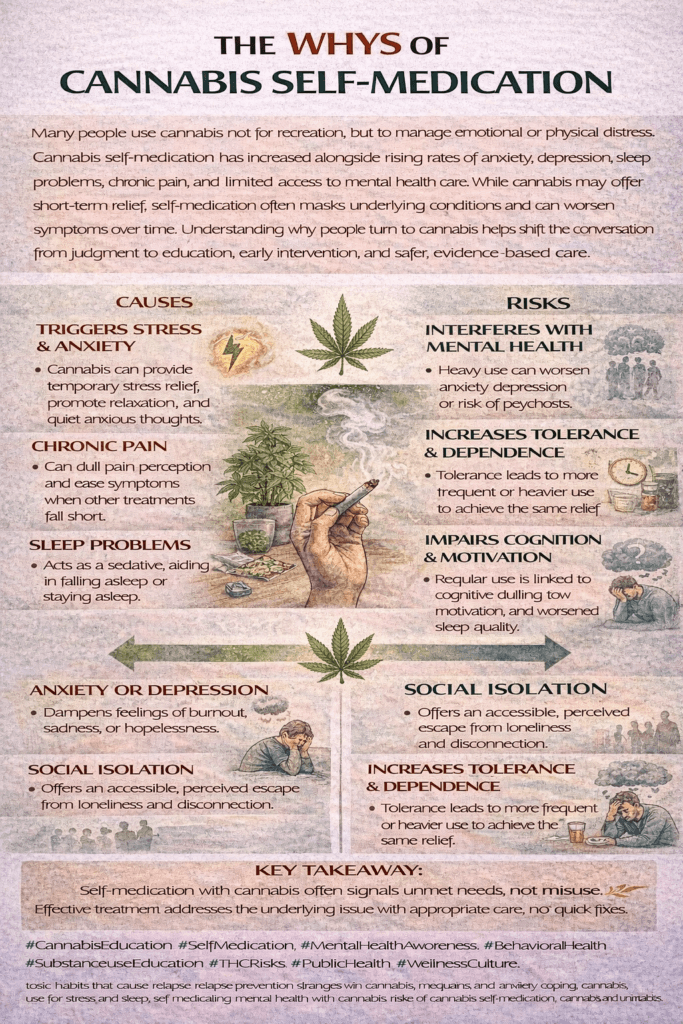
Cannabis self-medication has gained momentum as more people turn to cannabis for relief from symptoms like chronic pain, anxiety, and sleep problems. Many are curious about how it fits into personal wellness, but the growing number of products, opinions, and mixed information can feel overwhelming. This guide helps cut through the noise by drawing on research, real-world experience, and practical insight. Its goal is to support informed, balanced decision-making by highlighting why people self-medicate with cannabis, along with the potential benefits, risks, and individual factors to consider.
What Is Cannabis Self-Medication?
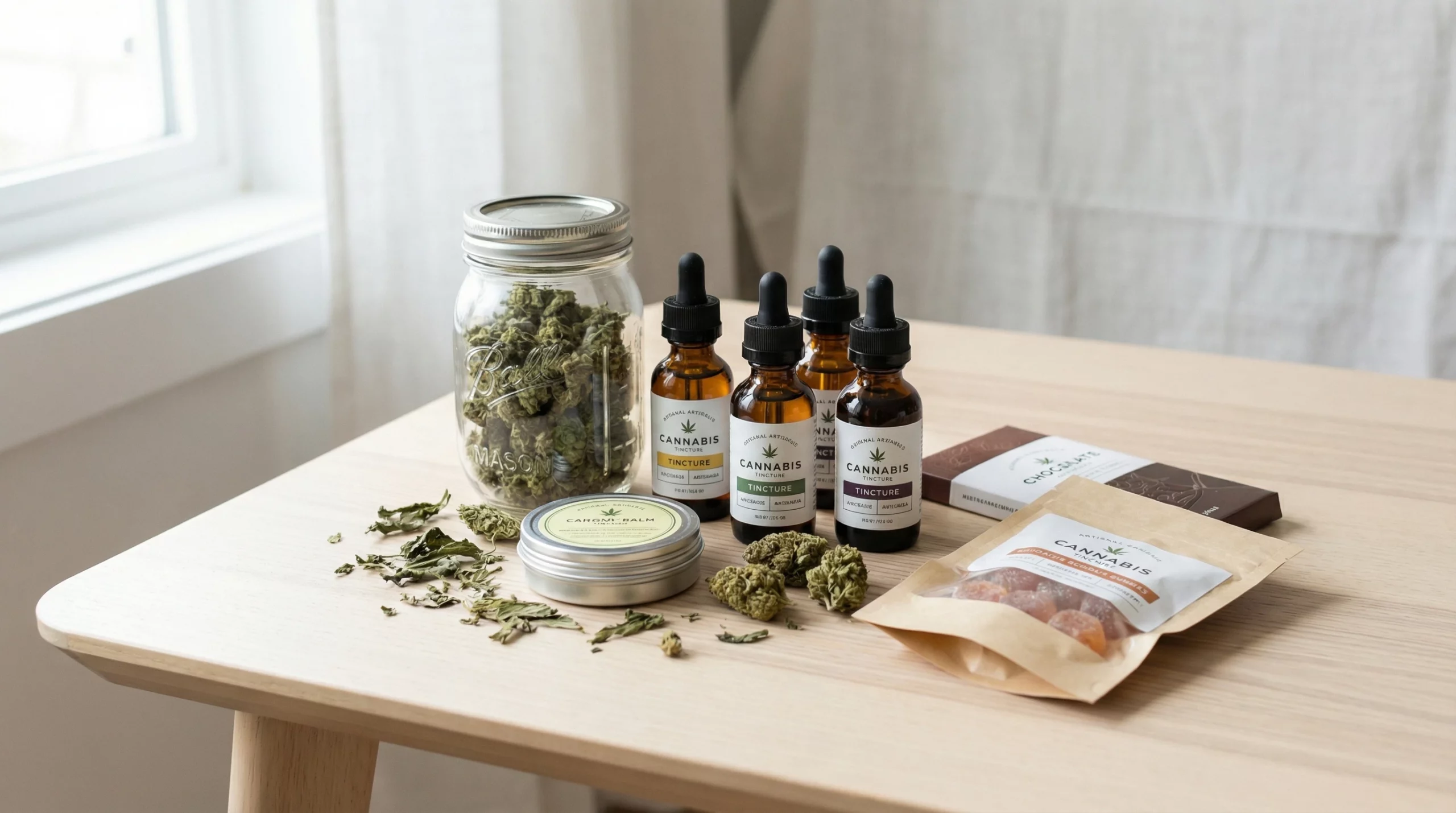
Self-medicating with cannabis means using the plant, whether it’s flower, oils, tinctures, edibles, or topicals, without direct oversight from a healthcare provider. People do this for lots of reasons: pain relief, stress relief, improved sleep, or managing things like migraines and digestion. Cannabis has a long history as medicine, with centuries-old records from different cultures. As laws change and stigma fades, people are more willing to share positive experiences. Recently, there’s been a steady rise in curiosity about cannabis thanks to wider legalization, easier access, and growing communities open to swapping advice and tips.
The spectrum of cannabis self-medication covers daily users, folks trying it occasionally, and those who use it as a last resort when nothing else has worked. Many people turn to cannabis because other medications haven’t helped or brought along tough side effects.
Why People Choose Cannabis for Self-Medication
Cannabis is appealing because it’s flexible. It’s many forms, like vaping, edibles, oils, and topicals, let people customize their approach to symptom relief. For conditions such as arthritis, fibromyalgia, PTSD, anxiety, or insomnia, cannabis stands as an alternative to traditional pharmaceuticals, sometimes offering fewer side effects.
Another big reason is control. Self-medicating gives people the freedom to adjust their dose, timing, and method until they find what fits. This independence can be empowering. Plenty of folks try cannabis to move away from opioids for pain or cut back on sleep aids that leave them feeling groggy the next day. Based on conversations in online communities, many users notice clearer minds and fewer medication hangovers when they use cannabis instead of certain prescription drugs.
Getting Started with Cannabis Self-Medication
If you’re new to cannabis, sorting through products and strains can be confusing. Here are a few steps I found really helpful for anyone giving cannabis self-medication a try:
- Start Low and Go Slow: Begin with a small dose and increase gradually. This safe approach gives you room to gauge your response.
- Know the Difference Between CBD and THC: CBD doesn’t cause intoxication; THC produces the “high.” Products come in different ratios, so you can pick what’s right for you.
- Track Your Experience: Keep a simple journal of what you used, how much you used, and how you felt. Logging this info can save you guesswork later.
- Understand Your Options: Flower, oils, gummies, capsules, and topicals all bring different effects and timelines. For fast relief, vaping or tinctures work quickly. Edibles take longer to set in, but often last longer.
Many cannabis clinics or dispensaries offer free education, and talking with a knowledgeable budtender helps if you’re not sure where to start. Online communities are also packed with crowdsourced tips and reviews. If you have friends or family with experience, swapping stories can shed some light on what to expect and what to try.
Common Reasons People Self-Medicate with Cannabis
There are plenty of reasons people reach for cannabis, but some stand out. Here are the most common ones I see people mention:
- Chronic Pain: Arthritis, nerve pain, migraines, and injury recovery are all situations where cannabis helps people ease discomfort without using heavy-duty pharmaceuticals.
- Sleep Problems: Strains with more indica or higher CBD are often calming and can help with falling or staying asleep.
- Anxiety and Stress: Low-THC, high-CBD strains can offer calmness without fogginess.
- Appetite Issues: Nausea from chemotherapy or certain conditions can be eased, and the right strain may boost appetite.
- Mental Health: Cannabis is sometimes used as a supplement to therapy for PTSD, depression, or mood swings, but it’s important to use caution and pay attention to your mental health patterns.
Important Things to Keep in Mind Before Trying Cannabis for Self-Medication
Cannabis self-medication isn’t without risks or downsides. Here are a few things to watch out for before you jump in:
- Interactions with Other Medications: Cannabis can interact with some prescriptions, especially sedatives, blood thinners, or antidepressants. Checking in with a healthcare provider can help keep you safe.
- Legal Issues: Laws regarding cannabis vary by location. Even if it’s legal in your state or country, there might be restrictions on possession, product type, or use locations.
- Impairment and Safety: THC can slow your reaction time and cloud your judgment. It’s important not to drive or use heavy machinery when under the influence.
- Habit Formation: Using cannabis daily or in high amounts can lead to dependence. Regular breaks and honest self-checks help keep usage in check.
- Mental Health Considerations: If you have a history of psychosis or certain mental health concerns, THC may not be safe. Choose your products carefully and look out for changes in your mood or thoughts.
When I began exploring cannabis, I always read dispensary lab reports and leaned on recommendations from friends with safe, established routines.
Types of Cannabis Products to Know About
The number of products out there can make it tough to decide what to use first. Here’s a quick breakdown of common options you’ll see:
- Dried Flower: Smoked or vaporized for fast-acting effects.
- Oils and Tinctures: Taken sublingually or mixed into foods. They offer accurate dosing and effects that last longer than inhaled cannabis.
- Edibles: Gummies, chocolates, and more. They’re discreet, but the effects come on slowly and can be quite strong. Start low and give them time before taking more.
- Topicals: Creams and balms rubbed into skin for localized pain. Usually no psychoactive effects.
- Capsules and Tablets: Great for consistency in dosing, especially for those who don’t like the taste or feel of inhaled or edible cannabis.
Advanced Tips and Things I Wish I’d Known Early
Experience makes a big difference with cannabis, but a few tips can help you dodge common mistakes:
Set a Routine: Making cannabis part of a specific routine, like having an edible after dinner, helps measure effects and timing.
Don’t Mix With Alcohol: Mixing cannabis and alcohol can make effects unpredictable or stronger than expected, which isn’t necessarily a good thing.
Check Product Labels Carefully: Potency varies. Confirm the THC and CBD numbers before trying new products or brands.
Look for Third-Party Testing: Reputable dispensaries share lab results, so you know what’s in your product. This reduces your risk of exposure to pesticides, heavy metals, or other contaminants.
Learning how my body reacts to different strains helped me steer clear of those that caused jitters or made me too sleepy. Reading reviews or talking to friends helps, but everybody is different. Paying attention to your own reactions is crucial. Don’t forget to log your experiences—patterns appear over time, and that’s how you find what really works for you.
Real-World Examples of Cannabis Self-Medication
I’ve listened to people share how cannabis changed their lives. One person with a sports injury found that daily CBD oil made nerve pain manageable without the side effects of painkillers. Another friend applies a CBD-THC topical to sore joints after hikes. For me, microdosing low-THC edibles helps me settle down after hectic days when stress tries to linger into the night.
- Chronic Pain Relief: Cannabis fills a gap for people who want to let go of strong prescription drugs in favor of something less heavy.
- Improved Sleep: Adding a little indica tincture before bed finally led to restful nights after years of struggling with insomnia.
- Managing Anxiety: Friends use CBD vaporizers as needed for sudden anxiety spikes. The quick effects can be a lifesaver during high-stress moments, especially in public places.
Frequently Asked Questions
Here are some questions I hear a lot from people exploring cannabis self-medication:
Question: Can I talk to my doctor about using cannabis?
Answer: Many doctors are open to talking about cannabis, as long as you’re honest about your goals and approach. If your provider isn’t supportive, it might help to look for one with cannabis medicine experience.
Question: How do I avoid getting “too high”?
Answer: Start with a small amount, favor lower-THC or higher-CBD products, and wait before using more. If you do get uncomfortable, stay hydrated, find a calm spot to rest, and give it time—the effects usually fade with patience.
Question: Is it safe to combine cannabis with other medications?
Answer: Sometimes cannabis and prescriptions don’t mix. Double-check with a pharmacist or healthcare provider, especially if your meds affect your brain or liver, just to be sure.
Final Thoughts on Cannabis Self-Medication
Cannabis self-medication is accessible for those willing to learn, experiment slowly, and keep an open mind. The benefits can really stand out, but knowing your body and local laws, along with understanding different product types, is vital for keeping your experience safe and rewarding. The learning curve gets easier with patience and attention to what your body tells you—there’s truly no rush.
The world of cannabis offers countless options and stories. Careful research, a habit of taking notes, and a sense of curiosity are your best tools on this adventure. Stay mindful and explore responsibly; you might stumble upon routines that bring genuine comfort and support your wellbeing better than you imagined.
Video: Self-Medicating with Weed? You’re Actually Making It Worse #MentalHealthAwareness #Addiction