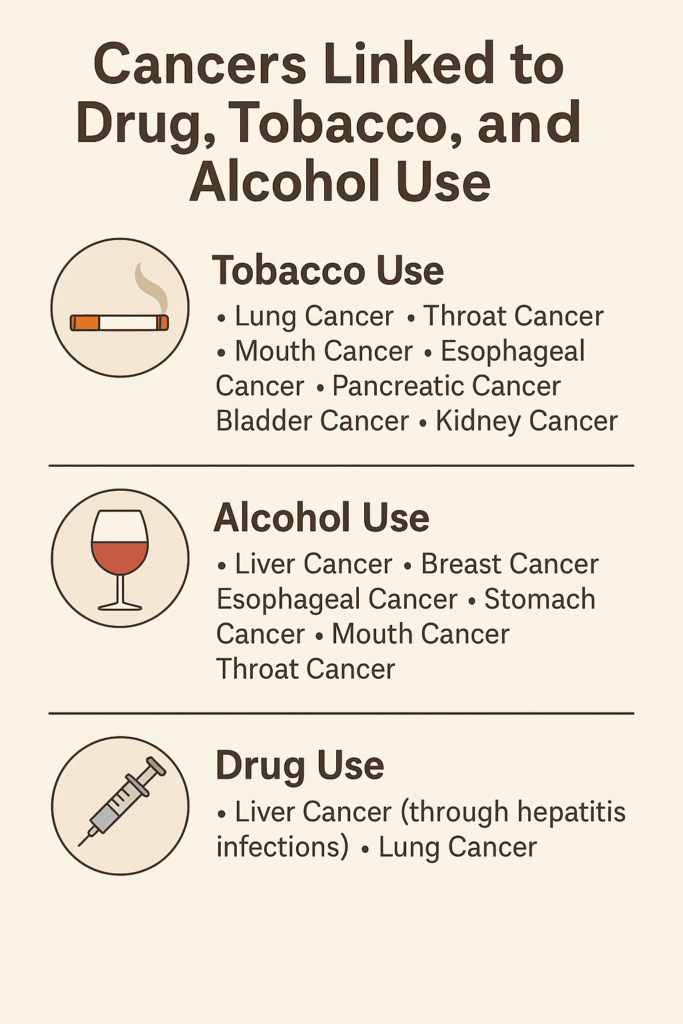
Many people know that smoking, drinking alcohol, and using certain drugs can be hard on the body, but the long-term risks go much deeper than most realize. These substances don’t just cause short-term symptoms—they can create cellular damage that greatly increases the risk for several types of cancer. Over years of use, chemicals in tobacco, alcohol, and drugs can inflame tissues, weaken the immune system, alter DNA, and disrupt the body’s repair processes. As I’ve learned more about this topic, the science behind these links has proven surprisingly clear and eye-opening. Understanding these connections helps explain why substance use plays such a major role in cancer development and why early awareness is so important.
Cancers Most Closely Linked to Tobacco Use
Tobacco is one of the most researched causes of cancer. When someone smokes tobacco or uses chewing tobacco for years, all kinds of harmful chemicals enter the body, many of which are known to damage DNA and harm cells. This can eventually trigger cell changes that turn into cancer. The risks don’t just stop at lung cancer. Smoking can cause a long laundry list of problems throughout the body.
- Lung Cancer: This is the type that’s most closely tied to smoking. According to the Centers for Disease Control and Prevention (CDC), about 80–90% of lung cancer deaths in the US are due to smoking.
- Mouth, Throat, and Esophagus Cancer: Smoking and chewing tobacco irritate the linings of the mouth, throat, and esophagus for years. Over time, this increases the likelihood that cells in these areas could become cancerous.
- Pancreatic Cancer: Researchers have found that smokers are up to twice as likely to get pancreatic cancer as non-smokers.
- Bladder and Kidney Cancer: Harmful chemicals in tobacco are filtered through the kidneys and end up in urine, coming into contact with the bladder and kidney tissues. This direct exposure pushes up cancer risk.
- Cervical Cancer: Tobacco use can weaken the body’s ability to fight off HPV infections, which are linked to cervical cancer.
- Stomach Cancer: This is another area that sees more trouble for regular smokers, since swallowed toxins irritate the stomach lining.
Even after years of use, quitting tobacco can gradually lower cancer risk. The sooner someone stops, the better their body’s odds at recovering over time. For more numbers and facts, the American Cancer Society has clear resources you can check out here on their site.
Secondhand smoke is another concern. People who do not smoke but live or work with smokers also inhale dangerous chemicals, which increases their chances for certain cancers—especially lung cancer and, in children, even childhood cancers. Protecting loved ones from secondhand smoke is one more reason to quit for good.
Alcohol Use: How Drinking Raises Cancer Risk
Alcohol is a regular part of many social lives, but there’s often little talk about how steady drinking can quietly raise cancer risk. Alcohol itself is a known carcinogen, meaning it can trigger cell damage that leads to cancer, even for folks who enjoy a few drinks every week over the long haul.
- Mouth, Throat, and Esophagus Cancer: Alcohol passes over these tissues on the way down, causing irritation and helping certain chemicals (like those in tobacco) get absorbed more easily. Drinkers who also smoke have the highest chances of getting cancers in these areas.
- Liver Cancer: The liver breaks down alcohol, but those chemical reactions can sometimes damage liver cells and lead to cirrhosis (scarring). It’s no surprise that long-term heavy drinking is a strong risk factor for liver cancer.
- Breast Cancer: Even light regular drinking is tied to a higher risk of breast cancer, likely because alcohol can change how the body processes estrogen and other hormones.
- Colorectal Cancer: When someone drinks often, the alcohol can irritate the lining of the colon and rectum, making it a risk factor for colorectal cancer as well.
Heavy drinking isn’t the only problem. The more someone drinks over time, the greater the risk, but even moderate drinking can slowly tick the risk higher, especially when paired with tobacco use. The National Cancer Institute has a detailed breakdown on alcohol and cancer risk here.
It’s important to note that all types of alcoholic beverages, whether beer, wine, or liquor, carry similar risks because it’s the pure alcohol itself that can harm you in the long run. The safest choice when it comes to drinking and cancer is as little as possible, but if people do drink, they should try to stick to recommended limits—a drink or less a day for women and two or less for men.
Drug Use and The Types of Cancer Connected to It
When it comes to drugs besides tobacco and alcohol, the cancer risk depends a lot on what someone is using and how often. Illicit drugs, prescription drugs, and recreational substances can all affect the body in unique (and sometimes dangerous) ways.
- Injectable Drugs (like heroin or meth): Sharing needles increases the risk for infections like Hepatitis B and C, which are strongly tied to liver cancer.
- Marijuana: The direct link between marijuana and cancer isn’t totally clear, but inhaling smoke from marijuana brings tar and other chemicals into the lungs. Researchers are still studying whether regular use could be a risk for lung or head and neck cancers.
- Anabolic Steroids: These synthetic drugs mimic testosterone and can damage the liver, with long-term users sometimes developing liver cancer or benign liver tumors.
- Opioids: While opioid medications aren’t directly known to cause cancer, some studies suggest that long-term use (and the immune suppression it causes) could potentially make people more vulnerable to infections and cancer-causing viruses.
Compared to tobacco and alcohol, the links for some drugs are less direct but still worth thinking about, especially when drug use is paired with other risk factors, like smoking or drinking.
Prescription drugs not used as intended can also pose risks. Chronic misuse can lead to weakened immune systems or other tissue damage, putting people at higher risk for certain infections and illnesses that could increase cancer risk in indirect ways over time. It’s yet another reason to follow medical advice closely.
What Actually Makes These Substances So Dangerous?
It comes down to the chemicals involved. Tobacco smoke contains more than 70 chemicals proven to cause cancer. Alcohol breaks down into acetaldehyde, which damages cell DNA. Injectable or smoked drugs can introduce viruses, irritants, or toxins that disrupt body systems and cell repair processes. It makes sense that anything messing with DNA or slowing down cell healing can raise cancer risk over time.
There’s also the issue of compounding risks. Someone who drinks and smokes, or uses injectable drugs while drinking heavily, can multiply their risks, sometimes by several times, compared to those who only use one substance or none at all. This means that even moderate use of multiple risky substances together can have a much bigger effect than each alone.
Common Questions About Cancer and Substance Use
I get a lot of questions about how habits like smoking and drinking affect a person’s odds of getting cancer. Here are answers to the most frequently asked questions.
Question: If someone quits smoking or drinking, does their cancer risk go back to normal?
Answer: Cancer risk can go down after quitting, but it often stays a little higher than average for years afterward. The longer someone stays away from tobacco and alcohol, the lower their risk drops. Quitting helps the body start to heal and can prevent further damage.
Question: What if someone only drinks or smokes socially—is that really dangerous?
Answer: Even social or occasional use adds some risk, but regular use (even in small amounts) makes the most significant difference over time. Sticking to recommended guidelines for alcohol and not smoking at all are the safest options. Every bit less is a step in the right direction for cutting cancer risk.
Question: Are there any screening tests for cancers caused by these substances?
Answer: There are screenings for some linked cancers, like lung cancer (for long-term smokers), colon cancer, and cervical cancer (for those at risk from HPV and tobacco use). Talking to a healthcare provider is the best way to figure out the proper schedule. Early detection is key to catching problems before they become bigger threats.
Question: Why do some people who smoke or drink a lot never get cancer?
Answer: Genetics and other lifestyle factors play a part, too. Some people’s bodies are better at repairing damage. That said, the odds of developing cancer go up with more use and more prolonged exposure, so avoiding these substances still makes a big difference for most people. It’s about risk, not certainty.
Reducing Your Risk and Staying Aware
For anyone who uses one or more of these substances often, cutting back or quitting is the best way to lower cancer risk. Getting regular checkups can also help catch issues early. If you’re worried about habits and what they could mean for your long-term health, it might be a good idea to talk with your doctor or look for support groups or counseling. Just taking the first step of asking questions is helpful.
Support matters. Sharing your intentions with friends or family and reaching out for help can make quitting or cutting back more successful. Many people also find it helpful to track their progress or set small, achievable goals.
There’s plenty of information and support out there. The CDC’s Smokefree website (smokefree.gov) and the American Cancer Society (cancer.org) have tips on quitting and more stats on the science behind these links. Knowing the facts makes it easier to make choices that support long-term health. By learning what really raises your odds, you can make decisions that give your body the best shot at staying healthy in the years ahead.
Video: The Connection Between Substance Use & Cancer Nobody Talks About #HealthTruth #Awareness