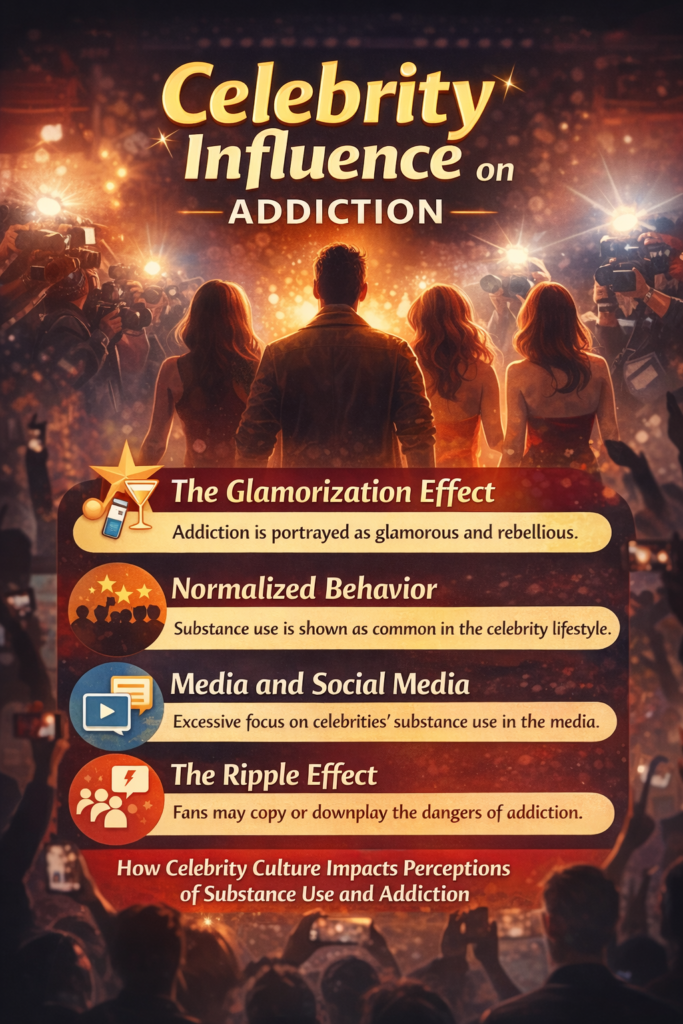
Addiction receives significant attention in celebrity culture, often in ways that blur the line between awareness and sensationalism. Through tell-all interviews, dramatic movie roles, and lyrics that reference substance use, celebrities frequently share stories about their experiences with alcohol or drugs. While these stories can sometimes help reduce stigma and start important conversations about recovery, they can also unintentionally glamorize or normalize risky behaviors. Because celebrities hold such a strong influence over public opinion, especially among younger audiences, the way addiction is portrayed in the media can shape how people understand it. This exposure can affect attitudes toward substance use, recovery, and the seriousness of addiction, making it important to examine how celebrity narratives impact public perception and behavior.
How Celebrity Stories Influence Our Views on Addiction
Media stories about famous people facing addiction shape how the rest of us think about these problems. When a celebrity opens up about a battle with substance abuse, people tend to pay attention. Sometimes these confessions highlight real risks and help reduce shame, but other times they end up glamorizing dangerous habits, especially when the coverage focuses more on parties, luxury rehab stays, or wild antics, instead of the damage done or the tough parts of recovery.
Over the years, there’s been a switch up from covering addiction as a dark, hush-hush topic, to making it a point of intrigue or even sympathy for fans. Part of this can be helpful; nobody should be shamed for facing addiction, but there’s a fine line between realistic honesty and portraying substance misuse as some kind of badge of honor or source of entertainment.
Social Media’s Role: Cool or Careless?
Social media platforms really amplify how fans view addiction and recovery. Every day, millions watch their favorite artists, actors, or influencers talk about drinking problems, wild party stories, or “sober adventures.” Sometimes this comes across as relatable and reassuring. Other times, it gives off a sense that experimenting with risky substances is just part of a fun, wild lifestyle—something that’s more about rebellion or creativity than genuine hardship.
Short videos and Instagram stories are especially influential because they reach younger fans quickly and can make partying or self-medication look super appealing. TikTok challenges, behind-the-scenes footage, or offhand mentions of drug use can quickly blur the difference between honest sharing and outright promotion. The bite-sized nature of this content often leaves out important context, making risky behavior seem harmless or even eye-catching.
On top of that, the real-time access to celebrities through livestreams and AMA sessions can give impressionable fans the illusion of intimacy, reinforcing messages about substance use as normal. Hashtags like #partyhard, trending memes about “bad decisions,” and merch drops inspired by wild nights all keep these narratives front and center.
Main Ways Celebrities Are Seen Glorifying Addiction
- Music, Lyrics, and Film Scenes: Songs and movies about addiction often explore pain or darkness, but they sometimes show risky behavior as bold or cool. When the negative consequences don’t get equal attention, fans may end up seeing substance use as part of being edgy, successful, or misunderstood.
- Aestheticizing Struggle: Social media filters, curated photos, and artful branding can make drinking or drug use look polished or aspirational. Accessories, luxury settings, or laidback bedrooms can glam up scenes that are, in reality, deeply painful.
- Turnaround Narratives: Celebrities with addiction histories sometimes get praised for their “comebacks,” while the struggles and relapses along the way get glossed over. This can feed the myth that fame or money make recovery easier, or that bouncing back from addiction happens in a neat, inspiring arc.
- Party-driven: To many fans, celebrities are more than just random people on TV.
Is Glorifying the Same Thing as Sharing?
Not every story, song, or movie about addiction is out to glamorize it. Sharing lived experience can break down shame, influence policy change, and even help people look for support. The difference comes down to the details. Does the story talk honestly about withdrawal, relationships lost, or mental health side effects? Or does it focus on the chaos, creativity, or emotional high points of addiction, leaving out the messy stuff?
In my experience, the most helpful public stories are the ones that dig into the complexity. Fans respond when their idols are open about real cravings, daily routines in sobriety, or the ups and downs of seeking help. But when the camera lingers on popping champagne, backstage parties, and filter-perfect lows, it’s easy for the actual danger to get lost behind the shine.
Why This Matters for Fans, Especially Younger Ones
To many fans, celebrities are more than just random people on TV. They’re role models and trendsetters. If a favorite performer or Instagram star glamorizes drinking, using, or even relapse, it can have a real-life impact on what others think is normal or interesting to try themselves. Studies have found that teens exposed to celebrity substance use, especially in music or film, are more likely to try those substances. This normalization can turn dangerous behaviors into rites of passage or marks of status.
There’s also the risk of missing out on real support. If addiction is seen as a creative quirk, or if it seems like everyone in the spotlight “gets through it” with money and cosmetic treatments, fans who are struggling might not take their problems seriously or might feel like recovery is only for the rich and famous. This false impression keeps many people from seeking the kind of help that actually works—community peer support, counseling, and affordable resources.
Parents, teachers, and mental health professionals are starting to pay closer attention to these messages. School presentations and after-school programs now often address how media—especially celebrity culture—can shape what teens and young adults believe about drug use, alcohol, and getting help. Making time for open, honest conversations about these realities is key to shifting the spotlight from glamorization to genuine awareness.
Spotting Glamorization in Media
- Focus on the Perks, Not the Pain: If a story skips over painful consequences and just shows wild nights, luxury, or funny mishaps, it might be glamorizing addiction, not warning about it.
- Skipping the Hard Parts: When coverage talks about “overcoming addiction” but never explains withdrawal, mental health tolls, or relapse, it sets up a false view of recovery.
- Carefree Attitudes: Joking about blackouts, DUIs, or rehab trips without any sense of regret or impact can make risky behavior look normal or even desirable.
- Setting as Status: Fancy rehab centers, exclusive parties, and luxury products are sometimes played up as signs of success, even if they’re related to addiction issues.
Taking a critical look at media portrayals helps fans, especially younger ones, pick up on whether a story is warning about addiction’s harms or dressing them up as entertaining or glamorous experiences. Media literacy and honest conversations at home can help counteract the influence of misleading portrayals seen online or in pop culture.
Responsible Ways for Celebrities to Talk About Addiction
I really appreciate it when well-known people talk openly about substance use problems without making it seem glamorous. Here are a few ways public figures have managed to strike a helpful balance:
- Raw Honesty About the Bad Days: Discussing moments of shame, relapse, or health scares can help paint the whole picture. It shows that recovery isn’t a straight line, and that getting help is nothing to be embarrassed about.
- Giving Credit to Real Support: Shouting out therapists, sober communities, or non-famous family members is way more helpful than just talking about luxury rehab centers or private healthcare.
- Avoiding Trigger Content: Trigger warnings, content notes, or even careful editing can help prevent stories from inadvertently promoting unhealthy choices or making light of trauma.
- Highlighting Recovery Resources: Many celebs now use their platforms to point fans to helplines, treatment programs, and mental health info. This kind of speaking up is more likely to help than just saying, “If I can do it, you can too!”
By taking these steps, celebrities and content creators can share valuable, realistic stories without glamorizing the struggle. Lifting up recovery resources rather than just showing off private clinics levels the playing field for everyone seeking support. Celebrities teaming up with nonprofit organizations or credible experts makes their advocacy even stronger and helps spread the word further.
Common Questions People Have About Celebrities and Addiction
Question: Why do so many celebrities seem to have addiction problems?
Answer: Stress, fast-paced lifestyles, access to money, and pressure from being in the public eye can all play a role. Not every celebrity faces addiction, but they do tend to have their struggles covered more widely in the news than everyday people. The intense scrutiny, combined with relentless schedules and expectations, can make coping even harder.
Question: Are there examples of celebrities who talk about addiction in a way that helps others?
Answer: Lots of musicians, actors, and athletes have talked openly about the hard parts of recovery—what cravings feel like, the embarrassment of relapse, or the benefits of attending support groups. Some have even partnered with organizations to raise awareness or fund treatment. When they highlight community care and the resources available to everyone—not just celebrities—it helps challenge the glamorization found in other media stories.
Question: What should I do if a celebrity I admire shares something triggering about addiction?
Answer: It’s totally normal to feel upset or conflicted by these stories. You can mute certain keywords online, reach out to friends or mental health professionals to talk, or look up local resources for support. Real support networks are available for anyone, not just people in the spotlight. Following safe, healthy influencers who discuss recovery can also provide perspective and counter the noise from less responsible voices.
Final Thoughts on Celebrity Influence and Addiction Glamorization
It’s really important to look beyond the glitz and see how addiction is handled in the media. Whether you’re a huge fan or just catching the occasional headline, being aware of how stories get told can help you spot the difference between real honesty and risky glorification. If you or someone you care about is struggling, remember that it’s not about copying what celebrities do; the best help is practical, genuine, and rooted in everyday support. Celebrities can lead by example by sharing responsibly, but real hope comes from honest conversation and professional help, not just fame or fortune.
Keeping things real and supportive, both online and off, helps everyone move past stigma and hype toward real-life healing. The most eye-catching stories should never take the place of truth or reliable help. Just as celebrities can lift up and help push change, fans and everyday people have power, too—let’s keep the conversation going and put a healthy recovery center stage.
Video: This Is Why Celebrities Make Addiction Look Appealing #psychology #celebrity #darkside