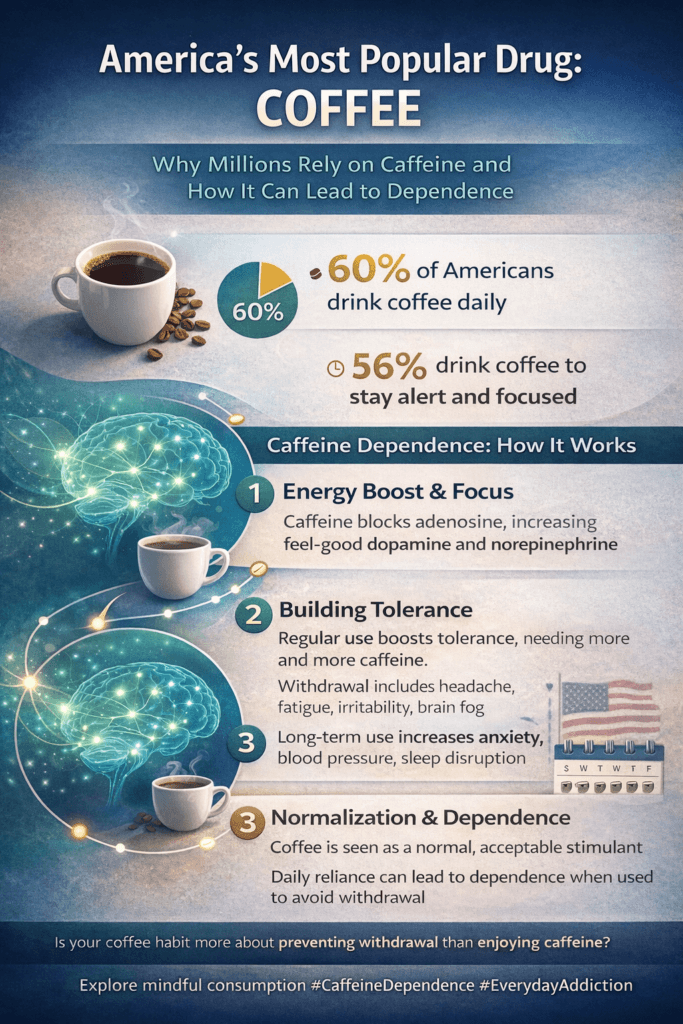
Coffee holds a unique place at the heart of American culture, from the buzzing city cafes to slow, peaceful mornings at home. Everywhere you go, folks have a fresh cup nearby. I’m right there with them—coffee is more than just a beverage. It shapes daily routines, creates connections, and sometimes even sparks the best conversations. In this article, I’ll show you what makes coffee America’s most popular drug, dig into the facts behind its ongoing popularity, and explore how it’s woven through life all over the country.
What Makes Coffee the Most Popular Drug in America?
Many people don’t even think of coffee as a drug, but it absolutely qualifies since caffeine is its active ingredient, and it’s one of the most widely used stimulants around the globe. In fact, about 90% of Americans sip something caffeinated daily, with coffee as the preferred pick. The U.S. spends billions on coffee every year, and with coffee shops popping up on nearly every block, it’s clear how deeply this drink is embedded in society. A regular cup fuels workdays, adds a jolt to social lives, and has even played a role in American business and creativity.
Coffee’s popularity stems from more than just its flavor. Caffeine boosts alertness and chases away drowsiness, providing that all-important energy surge people count on each and every day. Many rely on that first cup to set the tone for their morning, then keep refilling as the day rolls on.
A Quick History of Coffee in America
The story of coffee in America stretches way back to the Colonial period. Originally, tea was the drink of choice, but after the Boston Tea Party, coffee grew into a symbol of American independence and resistance to British rule. During the Civil War, soldiers relied on it for a much-needed energy boost, and later waves of immigrants brought their own unique ways of brewing and enjoying coffee, shaping America’s diverse coffee culture today.
Fast food chains like Dunkin’ and Starbucks helped turn coffee into a daily pleasure for millions. From classic drip brews and espresso drinks to chilled cold brew or sweet coffee shakes, the range of options is nearly limitless. Morning routines now almost always include coffee—it’s hardly an exaggeration to say it’s part of America’s collective DNA.
What’s Actually in Your Cup: Breaking Down Coffee
Coffee is more than just hot water poured over ground beans. Each cup is a mix of several compounds that contribute to its unique flavor and kick. Here’s what shapes your daily brew:
- Caffeine: The star of the show. This natural stimulant is why your cup wakes you up and steadies your focus.
- Antioxidants: Coffee is a significant source of antioxidants in American diets, which may help your body fight off daily wear and tear.
- Acids: Ingredients such as chlorogenic and quinic acids can affect taste, sometimes producing tart or bitter notes.
- Oils: Lipids add aroma and depth, especially noticeable in richer brews and darker roasts.
The specific bean, roasting process, and brewing method all play a part in determining just how much caffeine ends up in your cup, how it tastes, and how it makes you feel. High-caffeine blends are a go-to for some, while others stick to lighter blends or decaf when they want to avoid the jitters.
Why People Love Coffee: More Than Just a Caffeine Fix
Coffee is a source of comfort for many people. It signals a fresh start, a quiet break, or a treat during a busy afternoon. Cafes function as social hubs, and at home, brewing a pot of coffee often means quality time with friends or family.
The energy boost is a big part of coffee’s appeal. Caffeine sharpens focus, improves alertness, and battles off that sluggish feeling. Students use it to survive all-nighters, and professionals depend on it to meet deadlines and stay on top of things. But there’s more—some studies suggest regular coffee drinkers may enjoy certain health benefits, like a slightly reduced risk of certain diseases. Still, moderation is crucial, especially for anyone sensitive to caffeine.
Flavor also plays a role. Coffee’s range goes from nutty and smooth to fruity or bold, based on the beans and how they’re brewed. Savoring those unique flavors, whether black or with a splash of milk, is a pleasure all its own.
Tips for Enjoying Coffee Without the Downsides
While coffee can be a highlight in your day, too much can bring on jitters, nervousness, or throw your sleep schedule out of whack. Getting the benefits without the downsides is all about balance. Here are some tips that work for me and may help you, too:
- Time It Right: Try to keep coffee to the morning and early afternoon, so it’s less likely to mess with your rest.
- Pay Attention to Caffeine: Adults can usually handle up to 400mg a day (around four cups), but it’s always best to listen to your body—some folks do better with much less.
- Mix In Water: Keeping water nearby while drinking coffee or swapping in non-caffeinated drinks helps prevent dehydration.
- Easy on the Sugar: Choose milk or enjoy your coffee black to skip the extra calories and sugar loads from syrups or heavy creams.
If you’re interested in just how much caffeine is in your cup, know that it can vary a lot. A basic diner mug may have around 80mg, while a home-brewed strong cup could have over 200mg. Checking the source and strength helps you track your intake.
Things to Think About When Picking Coffee
With countless choices out there, choosing coffee can get overwhelming. Here are a few things I keep an eye on when exploring new beans or ordering my favorite drinks:
- Roast: Lighter roasts usually taste fruitier or more acidic, while darker ones deliver a bold, rich cup. Medium roasts offer balance and are often an easy favorite.
- Origin: Beans from South America tend to taste nutty or chocolatey; African beans can offer vibrant floral or berry notes; while Asian beans may have earthy flavors.
- Brewing: From drip and French press to espresso, pour-over, and cold brew, every method affects the taste and caffeine content. French press makes it bold; pour over gives a clean, nuanced flavor.
- Coffee Spots vs. Home Brewing: Many love their go-to coffee shop, but making coffee at home saves cash and lets you experiment with different types.
Trying out beans from small roasters or visiting independent cafes is a fun way to stumble upon new flavors and brewing tips. Don’t be afraid to experiment—you might track down a new favorite in the process.
Decaf: Still Part of the Experience
If you love the taste of coffee but want to avoid the caffeine punch, decaf is a smart pick. Modern decaf techniques keep those flavors strong and satisfying, without the same buzz. You get the ritual and satisfaction of coffee, just without as much stimulation.
Health and Coffee: What to Keep in Mind
Coffee offers perks like better alertness and, possibly, some protection against certain chronic illnesses. However, there are still things to consider:
- Heart Health: Overdoing the caffeine may spike blood pressure, so anyone with heart concerns should ask their doctor for advice on safe limits.
- Anxiety: Caffeine can amp up anxiety for some people. Decaf or lighter options might be the way to go if this is you.
- Sleep: Drinking coffee late in the day can disrupt your sleep routine, so try to keep your last cup before mid-afternoon for better rest.
Everyone’s response to coffee is different, so paying attention to how your body reacts is the best way to find the right balance for you.
How Coffee Fits Into American Life
Coffee shows up just about everywhere in the U.S. It energizes business launches, keeps night shift workers awake, and fills countless homes each morning with familiar, comforting aromas. Sharing “a coffee” has become a shorthand for catching up, holding meetings in relaxed spaces, or just treating yourself.
Beyond daily rituals, the coffee industry sustains millions of jobs—baristas, small-batch roasters, and global traders all find their livelihoods here. For some families, owning a coffee shop or roasting beans is a treasured tradition passed through generations—sometimes even bordering on art.
- On the Job: Office coffee pots encourage both productivity and camaraderie among coworkers.
- Social Circles: Meeting for coffee is the go-to casual hangout or low-pressure first date.
- Travel: Visiting independent coffee shops is a great way to sample a city’s local flavor, and every region brings a different approach to the brew.
Frequently Asked Questions
Here are several popular questions people often ask about coffee:
Question: Is coffee actually good for you?
Answer: For most, enjoying coffee in moderation delivers some health benefits, thanks to the antioxidants inside. Still, if you have medical concerns or special health conditions, ask your doctor, because needs really can vary.
Question: How much coffee is too much?
Answer: Experts generally recommend not exceeding 400mg of caffeine daily for healthy adults. That usually means about four cups, although the size and brewing method matter quite a bit.
Question: Are there alternatives to coffee for an energy boost?
Answer: Tea, matcha, and some energy drinks contain caffeine. Still, it’s smart to check the actual content (some are extremely strong) and keep hydrated. Short walks or healthy snacks can help boost energy without caffeine.
The Takeaway
Coffee has rightfully earned its status as America’s most popular drug through centuries of tradition, creativity, and daily routines. Whether it wakes you up, brings family together, or introduces you to new tastes, coffee adds richness to so many aspects of American life. Striking a balance means you enjoy all the upsides without the drawbacks. If you’ve only had the standard cup, now might be the perfect time to jump into the wider world of coffee and stumble upon your next favorite roast.
Video: America Runs on a Psychoactive Substance #CoffeeCulture #CaffeineTruth #Awareness