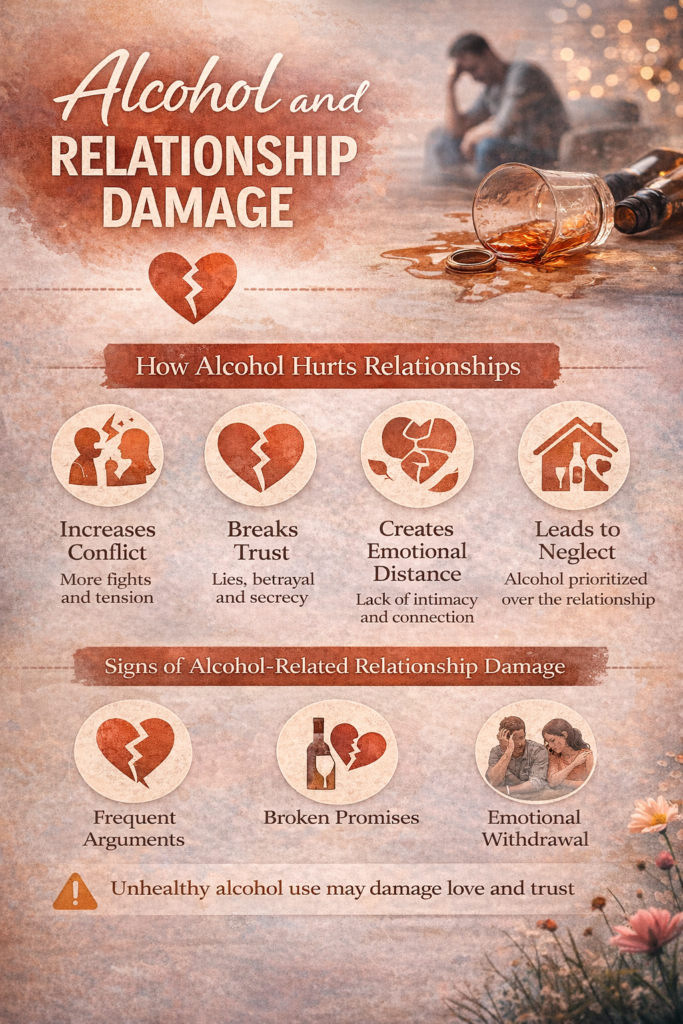
Alcohol tends to sneak its way into so many relationships. From casual drinks after work to stressful nights or celebrations, drinking can feel almost normal, until it starts to become a problem. What many people don’t notice at first is how alcohol can quietly chip away at trust, communication, and emotional connection, making even strong relationships feel rocky. I want to walk you through the biggest ways alcohol can cause relationship struggles and what you can do about it.
How Alcohol Slips into Daily Life
Alcohol is pretty common in social settings, date nights, or celebrations. It feels just part of life, and having a couple of drinks is often seen as a way to relax or bond. But when drinking moves from being just an occasional treat to a regular crutch, that’s often when trouble starts.
Plenty of couples find themselves slowly slipping into routines where alcohol becomes a go-to for stress relief or fun. It’s surprising how quickly a weekend wine habit or nightly beer can add up. Over time, this can create an invisible barrier in a relationship, sometimes making it hard to tell what changed or when things started to slide.
Odds are, if you find you or your partner is drinking more than intended, arguing more, or keeping secrets about drinking, alcohol is probably starting to take more space in the relationship than it should.
What Makes Alcohol a Relationship Problem?
I’ve seen alcohol affect relationships in so many complicated and subtle ways. Here’s why it’s often considered a “silent” relationship killer:
- It changes personalities. Alcohol lowers inhibitions, so small annoyances can turn into big fights, and conversations that start off mellow can get heated quickly.
- It fuels misunderstandings and poor communication. When someone’s been drinking, they might say things they wouldn’t otherwise or struggle to express themselves clearly, making healthy discussions trickier.
- It can create trust issues. Hiding drinking or lying about how much was consumed can chip away at trust, even if it seems small in the moment.
- It gets in the way of intimacy. Alcohol might make things feel fun in the short term, but over time, it often makes true closeness or honest talks harder to maintain.
- It can lead to avoidant habits. Some people use alcohol to dodge tough conversations, leading to bigger issues piling up over time.
Early Signs That Alcohol Is Hurting Your Relationship
Spotting when alcohol is becoming a problem is super important. I know it’s not always easy to see these warning signs when you’re living them every day. Here are some things to keep an eye on:
- Your arguments get louder or more frequent when drinking is involved.
- Either of you hides or lies about how much you’re drinking.
- Your plans as a couple start revolving around alcohol—date nights, vacations, or even just relaxing at home.
- Alcohol feels necessary to relax or have a good time together.
- You feel distant after drinking, either emotionally or physically.
- You notice more regrets or hurtful comments being made when alcohol is in the mix.
Why People Miss the Signs
Alcohol is marketed as fun, normal, and a way to unwind, making it tough to notice when things go sideways. Many folks also shy away from talking about drinking, either because it feels embarrassing or they worry about being judged.
It’s easy to tell yourself, “Everyone drinks!” or “It’s only a problem for people who are alcoholics.” In reality, alcohol causes problems long before it reaches that point. If you’re quietly worried or feeling unhappy, it’s worth checking in on your drinking habits together—no shame, just curiosity.
Steps to Take if Alcohol Is Hurting Your Relationship
- Have an Honest, Calm Chat: Choose a time when neither of you is drinking. Share feelings, not accusations. Try something like, “I feel distant when we drink, and I want us to feel close again.”
- Check in on Habits Together: Track honestly how much, where, and why you drink. Sometimes seeing the pattern on paper makes problems clearer.
- Set Boundaries Around Drinking: Consider trying alcohol-free days, choosing not to drink together for a set time, or limiting drinks when out.
- Explore New Shared Activities: Look for hobbies or routines you can enjoy together that don’t involve alcohol.
- Get Outside Support: Sometimes it helps to talk to a therapist or join a support group for couples dealing with drinking. There’s no need to struggle alone.
What Science Says About Alcohol and Relationships
It’s not just personal experience; studies agree that heavy or frequent drinking often leads to more arguments, higher divorce rates, and less life satisfaction in couples. For example, research highlighted by The National Institutes of Health shows that couples with mismatched drinking habits (where one drinks much more than the other) tend to have more fights and are more likely to separate.
The more alcohol is used as a stress reliever or emotional crutch, the harder it becomes to build honest, healthy connections. Even if you don’t drink daily, binge drinking or drinking to cope with stress can be enough to create distance and resentment over time.
An additional point to consider is that partners might ignore each other’s emotional cues when drinking becomes central to their routine. This means that problems can linger unspoken for too long, because the focus is on maintaining the habit rather than building a deeper bond. Research also points out that emotional numbness or reduced empathy after drinking can chip away at support, even when both people care deeply about each other. Pulling together as a team to address these gaps can rebuild much-needed closeness.
Common Struggles Couples Face Around Drinking
- Disagreements over what counts as “too much.” Everyone has a different tolerance, and what seems normal to one person can feel troubling to the other.
- Feeling left out or ignored. If one partner drinks and the other doesn’t, it can create jealousy or feelings of isolation.
- Money arguments. Alcohol gets expensive, and frustration over costs can build up without noticing.
- Broken trust. Hiding bottles, sneaking drinks, or denying how much was consumed all chip away at trust.
Disagreements About Drinking Habits
This issue is super common. Maybe one person is okay with a weekly night out, but the other wants to cut back. Instead of pushing, focusing on shared goals, like more quality time together or saving money, often works better than blaming or shaming.
If a disagreement about alcohol persists, try writing down what you both want out of your relationship for the future. This can highlight shared values and help both partners realize what’s truly important, beyond just habits or expectations around drinking. Making a list also helps make tough conversations a little easier by keeping the focus on teamwork.
What If One of You Wants to Stop Drinking?
This can be tricky, especially if drinking has been part of how you relax or connect. Supporting each other makes a big difference. Try alcohol-free date ideas, offer encouragement, and avoid temptation at home. If you feel stuck, outside help, like counseling, can make the process less overwhelming.
Tips for Protecting Your Relationship from Alcohol Trouble
Being proactive about alcohol can actually strengthen a relationship. Here are some things I’ve found really helpful:
- Talk openly, even if it’s awkward at first. The more you share how you feel, the easier it is to face things together calmly.
- Check in about goals. Want to feel closer? Save cash? Be healthier? Linking your choices about drinking to bigger goals makes it easier to stick to good habits.
- Find fun ways to relax together without booze. Walking, playing, working on home projects, or trying out new recipes can become favorite traditions.
- Support each other without judgment. Change can be tough, so celebrate wins along the way.
If conversations keep stalling or feel overwhelming, writing down your feelings or seeking outside support can help move things forward without blame. A journal, a trusted friend, or a professional can offer new perspectives that help both partners feel hopeful.
Frequently Asked Questions About Alcohol and Relationships
Here are some questions people ask me a lot when it comes to drinking and their relationships:
Is it possible to have a healthy relationship if one person drinks more than the other?
Yes, but communication is key. If drinking gets in the way, it’s important to set boundaries and check in with each other often.
What are some signs that alcohol is causing hidden problems?
If you notice more arguments, secrets, or emotional distance, those are common signs. Needing alcohol to “get through” time together is a hint that something’s off.
How can we cut back without making it awkward?
Try making new plans that don’t involve alcohol, set small goals, and be honest if temptation pops up. It’s okay if it takes time; small steps matter.
Moving Forward: Where to Find Help
No relationship is perfect, and changing a drinking habit can feel difficult, but it’s not something you have to figure out alone. There are lots of resources out there, like Al-Anon for families and partners, couples therapy, and online communities. Reaching out for a little guidance can make things feel a lot lighter and give your relationship the support it deserves to start feeling safe, honest, and close again.
Trust, open talks, and new routines go a long way in putting alcohol back in its place, rather than letting it quietly drive a wedge between you and the person you care about most. If things still feel uncertain, taking it one step at a time and reaching out for support can help both partners feel understood and hopeful for the future.
Video: How Couples Fall Apart Over Alcohol #relationships #psychology #breakups